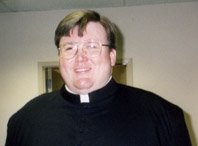
Friday, July 13, 2007

The Future for Orthodox Catholics in the Republican Party

The other day I was listening to the Neal Boortz show (I don't listen regularly - Boortz exemplifies I've-got-mine-the-rest-of-you-can-go-to-Hell libertarianism, and he's pretty hostile to any form of serious Christian belief). But Boortz was talking about the Republicans chances in '08, which he thought weren't good.

He referenced a column by Robert Novak, in which he wrote:
It is difficult to exaggerate the pessimism about the immediate political future voiced by Republicans in Congress when not on the record. With an unpopular president waging an unpopular war, they see electoral catastrophe in 2008, with Democratic gains in both House and Senate and Hillary Clinton in the White House.

This led me to wonder about whether orthodox Catholics and other traditon-minded conservative Christians would have a place in the Republican Party for much longer.

I don't think so.

The widespread attractiveness of the Giuliani candidacy, the willingness of even so-called "social conservatives" to look the other way regarding Rudy's embrace of the Culture of Death, and the Republicans' enthusiasm for The Leviathan State all bode ill for the future.

Say what you will about the Republicans "lip-service" to social conservatives, their keeping pro-lifers at arm's length and their paltry delivery in about 25 years in power in the White House and Capital Hill. The fact is, conservative Catholics had a voice in the party's agenda.

But the Mammon-first conservatives have always wrinkled their noses in disgust at us, and that disdain is starting to break out into open hostility.

If, as seems to be the common opinion, the Republicans lose again in '08, I think that will be the beginning of the end for any substantive socially conservative Christian voice in the Republican Party. Social conservatives will receive the brunt of the blame. It's happening already.

The trend in our culture is more and more towards "leave me alone, don't try to tell me I can't [insert vice or sin crying out to heaven here]." The Republicans will eventually cave in to the pressure to submit to that trend. The Republican Party is not the Church; it does not have the graces and charisms that allow the the Church to resist the prevailing winds of the Zeitgeist.

So what will we do then?

This is not a brief for the Republican Party, urging you to stick with them because "its our only hope". The Republicans don't deserve our vote. They have all but flipped us the bird over the last couple of years. I'm not sure there's much hope left - there.

So what will we do? And where will that leave our country, pulled on one side by the Jacobins (Hillary) and Panderers (Obama) of the Left, and on the other by Friede durch Kraft cynics (Giuliani) and hollow men (McCain) of the Right?

Common Ground Catholic - Evangelical Dialogue To Air

Trinity Broadcast Network (TBN), home to Televangelists Benny Hinn and Joyce Meyer, will be broadcasting a 90 minute "dialogue" between Fr. John Riccardo, a priest of the Archdiocese of Detroit, and Pastor Steve Andrews of Kensington Community Church, a suburban Detroit "MegaChurch".

The show will air tomorrow, Saturday July 14, at 5:00 PM Eastern.

I'm not familiar with Pastor Andrews or his church, but I do know Fr. Riccardo: He is an outstanding priest, well known in the Detroit area for his orthodoxy and zeal for the faith. I'm confident that Fr. Riccardo will hold up the Catholic "end" very well.

This promises to be something rather different from the usual fare on TBN.

It also seems to me to be a tremendous opening, that an Evangelical broadcaster would air such a bold and zealous proponent of the Catholic faith.

For more information on the show (which is also available on DVD) go to the producer's website, Nineveh's Crossing.

Tuesday, July 10, 2007

The "Live Earth" Idiocy

This past weekend, while Catholics were considering, celebrating, and (in some quarters) lamenting the Motu Proprio "Summorum Pontificum", ignorant rock stars and celebrities were engaging in the act of mutual mental masturbation known as "Live Earth".

I was going to write a sendup of the foolishness, but someone beat me to it. From Dan Proft's column at Human Events:
It was not the noise pollution from climatologists like Kanye West and the Pussycat Dolls. No, that didn’t bother me...

The delicious irony of watching the Dave Matthews Band, the same eco-friendly Dave Matthews Band that dumped 800 pounds of human waste from their tour bus into the Chicago River during their stop through three years ago (well, maybe the irony wasn’t exactly delicious), that also didn’t bother me...

Watching Gore keep it real with his Hollywood friends is kind of like watching your dad shake his groove thing at a wedding...

Read the rest.

Saturday, July 07, 2007

A New Look!

I'm returning to blogging after a 6 month hiatus. Since I'm returning anew to the blog, I'm updating it with a new look!

I hope the new template makes the blog look snappier as well as easier to read.

Hope you all like it!

Monday, April 30, 2007

Rumors of My Impending Death...
...have been greatly exaggerated.

I'm not sure where this came from, but the story over on Mark Shea's blog is untrue. Not that I'm in any way upset with Mark. I just spoke with him on the phone a few minutes ago, and I know he was acting in good faith.

I'm not near death, I didn't have a heart attack. In fact, I'm fine. Rumors of my death might reflect wishful thinking on the part of some, but, oh well, it seems I'm going to be around for a while yet.

One good thing, I suppose about this is that I'm finding out who my friends are. I've had many phone calls of concern in the last half-hour or so, and it's nice to see all the promises of prayer. Thanks to all of you!

I suppose my failure to post for so long has probably contributed to this. In the post on Mark's blog the source of this rumor refers to my blog as "long abandoned." Perhaps that's an indication of the ephemerality of the internet, but I don't think of this January as that "long" ago.

I stopped blogging because I got too busy, then we were into Lent and it seemed not be a good time to start blogging again, and then came the busyness of Easter, etc. I have been planning on blogging again for the last couple of weeks, but I was waiting until I finished a computer upgrade (now complete) and could update the template of my blog.

I will start blogging again soon. Thanks for your readership and concern!

Monday, January 15, 2007

Latin and the Wedding Feast of Christ the Bridegroom

Homily for the Second Sunday in Ordinary Time

Second in a series of three homilies on the Liturgy

Isaiah 62: 1-5
Psalm 96: 1-2, 2-3, 7-8, 9-10
1 Cor. 12: 4-11
John 2: 1-11


In our Psalm response a few minutes ago, we sang "Proclaim his marvelous deeds to all the nations", and we heard the cantor sing in the first verse:
Sing to the Lord a new song;
Sing to the Lord, all you lands.
Sing to the Lord, bless His name.

That, my brothers and sisters, is precisely what happens in the liturgy: Every time we gather here to celebrate Mass, the marvelous deeds of the Lord are proclaimed to all the world, to every creature. Every time I offer the sacrifice of the Mass, we sing the new song of the Lord, for we are singing, we are praying, the prayer of Christ himself, offered by and through His church.

And the marvelous deeds of God, the saving work of Christ, is not only proclaimed in word, but it is actually made present to us here and now. We are made present at the eternal sacrifice of Christ which was offered at Calvary and the Last Supper. Heaven comes to us on earth, so that we may be lifted up into the very life of heaven.

And all of us are invited, are called, to share in this proclamation, this making present, of the saving work of God. For we all, as members of the Body of Christ, participate in Christ's offering of Himself to the Father. That is what St. Paul is getting at in our second reading from his letter to the Corinthians. He tells us that there are different kinds of gifts, given to each of us, but they are all given by the same Spirit. We serve in different ways, but we all serve the same Lord. Indeed, we all have our part to play in the offering of the Holy Liturgy, whether we have any formal role or not. Indeed, there is no such thing as "just" attending Mass. There is no such thing as "just" attending Mass because each of us is united, in and through the church, to this offering. We are all presented to the Father by Christ in the Mass.

So the church, wanting to draw us more deeply into this offering of the sacrifice of Christ, has always had two major concerns. One of these concerns is that the liturgy be in some sense accessible, understandable, to us, so that we can consciously participate in this offering. Another concern is that we are always faithful to the Tradition that has been handed down to us by Christ through the apostles. The church has been entrusted with the sacraments, with the liturgy, by Christ: she must be a faithful guardian and steward of the great treasure she have been given. The church wants to be sure that the faith we hold is the same faith we have received from the apostles. She wants to be sure that the Eucharist we celebrate is the same Eucharist that Christ gave the apostles at the Last Supper.

These two concerns are not opposed to each other, but they must be balanced. And that is where the history lesson comes in:

Now, we all know that at Vatican II, the council fathers decreed that the Mass be made available in the languages of the people, the vernacular. The council fathers decided that the liturgy would be more accessible if it was available to us in our own languages. So the Holy See entrusted the bishops of each land the task of translating the prayers of the Mass into their own language: French, Spanish, German, English, and the rest.

So far so good. The American bishops set up a commission of experts to translate the Mass into English. And when it was ready, we started having Mass in English. But something else happened as well: In most places in our country, not only was English introduced, but, almost overnight, the Latin was thrown out entirely. Those of you who are old enough to remember may recall this. I was only a child at the time, but I have heard from some of those who were old enough to remember that in some places people literally went to Mass one Sunday and it was in Latin, and the next Sunday they went and it was in English. And the Latin, all of the prayers and the Tradition that went along with it, disappeared almost overnight.

But the problem is that that was never the intent of the council fathers; that was never the intent of the church. Indeed, the documents of Vatican II say as much. The ushers have handed out a pamphlet to you that I made up, on Latin and the Liturgy. On the first page, right in front, you'll see I have quoted from Sacrosanctum Concilium, the Constitution on the Liturgy of Vatican II. It says:
The use of the Latin language... is to be preserved in the Latin rites.

(By the way, we belong to the Latin or Roman rite of the Church, as opposed to the Eastern or Greek rites.) The council fathers go on to say:
Nevertheless care must be taken to ensure that the faithful may also be able to say or sing together in Latin those parts of the Ordinary of the Mass which pertain to them.

So you see, the church never intended for us to get rid of Latin. The church meant for us for us to have both English and Latin, not either one or the other. And since then, our popes have urged us to hold on to our Latin tradition. Each pope since the council has encouraged the use of Latin in the liturgy. In the pamphlet you have been given I have included some statements of the popes and recent bishops about the use of Latin in the liturgy. They have reminded our bishops and ourselves that Latin is part of our heritage as Catholics, that it is a sign of unity for the church, not just for the church of today, but the church as she has been down through the ages.

And so it is. When we pray the Mass in Latin, we are praying in the very same words used by countless saints and martyrs down through the ages. We are singing the very same chants and hymns that were sung by millions upon millions who have gone before us, and are now praising God in heaven. The use of Latin unites us to them in a particularly literal way. Let's remember as well that thousands upon thousands of martyrs through the centuries died for those words, and for the faith that those words represent and communicate.

We must cling to, hold fast to, our Latin tradition because it is our heritage; it is where we have come from as a people. As my friend Mark Shea described it, if we forget who we are, if we forget where we have come from, it is a kind of suicide. A people who forgets is a people in danger of extinction.

Over the last decade or so, the urgings and warnings of our popes have started to take hold among our bishops, priests and many laypeople, and a movement has emerged to recover and restore our tradition of Latin in the liturgy. It has been growing for some time, and more and more parishes have been taking part in this movement. You have all seen in recent months that we have been using Latin more in the liturgy here. Some people have asked me, "Why are we doing this? They aren't doing this in other parishes." Well, it all depends on what other parishes you're going to. I know that they've been using Latin in some liturgies at the cathedral for a long time now. At St. Charles in Coldwater, Fr. Brian Stanley has been leading his parish in this direction. Last month I had lunch with another pastor, and we talked about his plans for re-introducing Latin at his parish. Parishes are going in this direction because this is what the church is asking of us. And it's not new, because in fact this is what the church has always asked of us.

It's important to stay in contact with our Latin heritage for another reason. You'll recall, as I said a few minutes ago, that the bishops of this country were entrusted with the task of translating the Mass into English. And they felt they needed to do it very quickly, because they wanted to make the Mass available to people in our own language. Now, who can tell me what can happen when you do something in a hurry? [a pause, then someone says] "You make mistakes". That's right, you make mistakes. And that's what happened when they translated the Mass into English.

[Going over to a lectern and picking up a large book...] You've probably noticed this large book up here at the front of the Church. This is the Missale Romanum editio typica. Now, I know that's a mouthful, but this book is the official Latin missal for the whole church. This is the church's official Latin edition of all the prayers of the Mass. And every version in the languages of the people is supposed to be a faithful, accurate translation of this book. The problem is that the book we've been using isn't always accurate. The pamphlet you've been given provides some examples of the inaccuracies in our current translation of the Mass.

Now the translation we've been using was intended to be temporary, and the church moves slowly. It should give you an idea of how slowly when you realize that "temporary", in this case, means thirty years! But the bishops began to realize a while back that there was a problem, and the Holy See started insisting that they do something about it. So, after many years of debate, last summer the bishops approved the first in a round of corrections and changes to the prayers of the Mass. For example, when we say the Confiteor, instead of saying "I confess to almighty God, and to you, my brothers and sisters, that I have sinned through my own fault...", we'll say "...I have sinned greatly...through my fault, through my fault, through my most grievous fault". I notice some of you older folks nodding your heads. You're remembering what we used to say in the old Mass before Vatican II. Well, the fact is that the church never changed those words in the new Mass, but somehow they got left out of the English. So now the bishops are fixing that, and some other things. We'll probably start seeing these changes take effect in the next year or two. After Mass, the ushers will give you a handout with excerpts from a Catholic News Service article which talks about some of these changes in more detail.

Ultimately ,what these changes, and the movement to recover the Latin tradition of the Church, is all about is faithfulness: Faithfulness to the great treasure we have received. Faithfulness to the liturgy by which we are made present at and participate in the great eternal sacrifice of Christ.

Our gospel today tells of the wedding feast at Cana. The Church Fathers saw the wedding feast at Cana as a prefiguring, an anticipation, of the wedding feast of Christ the bridegroom and his bride, the Church. And we celebrate this eternal banquet of the Lamb every time we gather with the priest to celebrate the Mass. Christ eternally offers the sacrifice of Himself for his bride the church, and in the Eucharist this sacrifice is made present to us here and now. We have been invited to enter into, to take part in, this sacrifice. By being faithful to what we have received from the apostles, by being faithful to what the church offers us, we will indeed be drawn into this sacrifice, we will indeed find our place at this, the eternal banquet of Christ the Lamb, the Bridegroom, the High Priest.

Tuesday, January 09, 2007

I Couldn't Resist...

After seeing this on some other blogs, I couldn't help wondering what my "Peculiar Aristocratic Title" would be.

My Peculiar Aristocratic Title is:
The Very Reverend Lord Robert the Antediluvian of Chignall Smeally
Get your Peculiar Aristocratic Title


You may make your obeisance now.

Monday, January 08, 2007

The Liturgy: Our Eternal Epiphany

Homily for The Epiphany of the Lord


Isaiah 60: 1-6
Ephesians 3: 2-3a, 5-6
Matthew 2: 1-12


Today we celebrate the Feast of the Epiphany. The word Epiphany comes from a Greek word meaning "to shine forth" or "to make known". And that is what we celebrate today: that Christ shone forth, was made known, as newborn King, Savior, and Messiah. And He was made known not only to the people of Israel, not only to the Jewish shepherds, but to the three Wise Men as well.

We have to remember, the three Wise Men were not Jews. They were not part of the people of the covenant. They were Gentiles; they belonged to the "nations" we heard about in our first reading from Isaiah, the nations whom Isaiah said would "walk by their light", who would come from afar to proclaim the praises of the Lord. God revealed His coming among us, as one of us, not only to the people of the covenant, but to these three kings as well.

And so these wise men are a sign for us. They are a sign that, from the beginning of His coming among us, God's plan was that the newborn Savior was to be Savior not of just one particular people, not only of one nation, but the Savior of all peoples and nations. They are a sign of what St. Paul referred to in the Letter to the Ephesians which we heard a few moments ago, that:

...it has now been revealed to his holy apostles and prophets by the Spirit: that the Gentiles are coheirs, members of the same body, and copartners in the promise in Christ Jesus through the Gospel.

We are told in the gospel that the three wise men, when they saw the infant Jesus, "prostrated themselves and did him homage." These men were great men in their own lands, mighty and powerful, and yet they bowed down and humbled themselves before this baby. This was no mere gesture of respect - they wouldn't have done this unless they recognized in the Christ child a King far greater than themselves. They bowed down and gave Him their worship, because they saw, somehow they understood, that this child was not merely a king, but The King. They recognized that this infant was the King and Ruler of all, the Lord of all creation.

And so these three kings, these wise men, are the first of all the peoples of the earth, all the people who did not belong to God's covenant with Israel, who come to be members of the New Covenant, not by birth into a tribe or nation, but by faith in Christ Jesus. The three kings are a symbol of all the people down through the ages who worship the King, and offer him their adoration. The wise men, we can say, represent all of us - they represent you, and you [pointing at individual parishioners] and me, as they kneel before the Christ child in our stead.

God's revelation of Himself in Christ did not just happen for one people, generation, or time. God makes Himself known to us even now. For you see, every time we gather around this altar for the Eucharist, every time a priest celebrates the Holy Sacrifice of the Mass, God makes Himself known to us again, renews His presence among us. For in the liturgy of the Mass Jesus Christ - Savior, Lord, and King - makes Himself present to us in His body, blood, soul and divinity. In the liturgy, Christ comes among us just as really and truly as He was present before those wise men in Bethlehem. Every Mass is a new "Epiphany", or rather, a continuation of the one great Epiphany, as Christ's eternal saving work is made present to us here and now.

In the Gospel today, we are told that the wise men "opened their treasures and offered Him gifts of gold, frankincense, and myrrh." And in this the wise men are also a sign for us. For just as the wise men offered their gifts to the Christ Child, so do we make an offering at Mass. Of course, we offer our financial contributions in the collection, as a gift to God and His church. But in fact, we offer far more than money at Mass. You see, every Sunday, someone brings up the bread and wine in the offertory procession. And that bread and wine signify our participation in the great sacrifice that Christ offers to the Father. The Church has always insisted that the people take part in this offering, because we are united with the Sacrifice Christ offers for us in and through the Mass. We are invited and called to unite oursleves with this offering. And so that bread and wine represent us: our lives, all that we are and all that we have. All of creation, in fact, is presented to the Father by Christ in His sacrifice, and so, in the Mass, we participate in this one sacrifice of thanksgiving and praise. When I hold up the paten with the bread become the Body of Christ, and the cup holding the Blood of Christ, you too are being offered: your lives, your dreams, your sorrows, your sufferings, your disappointments, and your victories and joys, are presented through Christ to the Father. In the liturgy, Christ comes among us, Heaven comes down to earth, so that we may be lifted up into the very life of the Blessed Trinity.

And to us, having made this offering, having taken part in this Sacrifice, then Christ gives the greatest gift, the greatest treasure of all: His very self. He gives us Himself as food and drink; communicates to us His divine life. And in receiving Christ's life in ourselves, the word of the prophet Isaiah are fulfilled in us: "Upon you the Lord shines, and over you appears His glory...You shall be radiant at what you see, your heart shall throb and overflow!"

This is what happens at every Mass. In the liturgy we are given an opportunity - an opportunity to enter ever more deeply into the saving mystery of Christ's life, death, and resurrection. Through His church, Our Lord offers us in every liturgy the opportunity to know Christ, as Christ makes Himself known to us. Over the next two Sundays, I will be talking more about this opportunity we are given, the great treasure Jesus gives us in the Mass. I'll talk about what we have received from the apostles and their successors, how the Church invites us to participate in it, and how, through it, we are united to Christ and His whole Church.

Isaiah said, "Rise up in splendor, Jerusalem! Your light has come, the glory of the Lord shines upon you." The light of Christ does shine upon us: We are the new Jerusalem, and Christ invites us to rise up in the splendor He has won for us. The splendor of Christ is given to us in and through the liturgy. Come, and enter into the mystery of this great Epiphany!

Tuesday, January 02, 2007

A Really Terrible Hymn

This has to be one of the worst hymns ever conceived by man:

"O God That Great Tsunami"

Any hymn with the words "economies" and "sewage" in it has to be awful.

(H/T to Gavin)

Thursday, December 28, 2006

A Blessed Christmas At St. Stanislaus!

I hope all of you had a Blessed and Merry Christmas - though, as we are still in the Octave of Christmas, it's really still Christmas!

The Christmas Masses at my parish of St. Stanislaus were wonderful. Firstly, the church itself was beautifully decorated by my parishioners, as you can see here:


And the liturgies themselves were glorious! The 6:00 PM Mass is the "Children's" Mass, and we had a children's choir from our parish school sing. Among other things, they sang the French carol "Sing We Now of Christmas", and did so very well. The Ordinary of the Mass was Chant - anytime someone tries to claim that Gregorian chant is "too difficult", just point out to them that I regularly teach 8-year-olds to sing it quite nicely!

Midnight Mass was also beautiful. We celebrated the liturgy with full solemnity - Sung Mass, choir, brass, and incense. I even broke out my biretta for the occasion:


I was particularly happy that we did the Kyrie from Mass V, as it really conveys the exuberant joy of Christmas, with its melismas. If you've never heard it, go here and take a listen! The choir did a good job on it, and the congregation made a pretty decent attempt of it as well!


Incensing the Altar at the Offertory


I also chanted the gospel at Midnight Mass and at the Mass of Christmas morning. Here's a photo of me incensing the Gospel at the morning Mass:


The choir, servers, and everyone else, did a wonderful job. I'm also particularly grateful to my Music Director, Gavin, for a tremendous effort and first rate organ playing!

Jesus Christus Natus Est!

Friday, December 22, 2006

Rejoice! The Lord Is Near!

I'm finally putting up the pictures of the 11:00 Mass for Gaudete Sunday. Sorry for the delay, but I am a little busy this week...

Here's a picture of the sanctuary at St. Stanislaus, to give you the layout:


And here I am chanting the collect:


Note the rose vestments. Now, I know some of you will say that my vestments are too pink to be a true rose color. And that may be the case. But they are beautiful, and I'm secure enough in my masculinity that I will wear them with impunity.


Here I am again, on my way over to proclaim the Gospel.


My homily was about the joy of expectation we are invited into while we await the coming of the Savior. Among other things, I chanted the first line of the Introit (solo) to illustrate the spirit of joy expressed in the liturgy.


"Per Ipsum, cum ipso, et in ipso..."


As mentioned in my previous post, at this Mass I used the Roman Canon in Latin. How did that go over, seeing that such a thing hasn't been done at St. Stanislaus in decades? Well, firstly, there were no complaints, and many positive reactions. But even more telling is this: Our music director had prepared a worship leaflet that contained the Latin text and facing translation of the Canon. I observed at several points that people were, in fact, following the text, and I noted the rustling of pages of the program periodically, as people followed along in their programs. So the people followed and prayed along with active interest. I think we might call that "participatio actuosa", mightn't we?

All told, the liturgy was glorious! Many parishioners complimented the schola on the beauty of their singing. And I think our own parish choir (who were in attendance) was edified and heartened, to see and hear a group of ordinary guys (and that's who the Schola are - none of them are professional musicians) sing chant with such skill and devotion.


The Schola of the Chair of St. Peter and Yours Truly


Deo gratias!

Friday, December 15, 2006

Liturgy Alert - Gaudete Sunday!

This Sunday, the Third Sunday of Lent, is Gaudete Sunday. This Sunday gets its name from the Latin word for "Rejoice!", which figures prominently in the Introit for the Mass:

Gaudete in Domino semper, iterum dico, gaudete!

Rejoice in the Lord always, I say again, Rejoice!


This is a quote from St. Paul's Letter to the Phillipians, chapter 4, which is also the second reading for the Mass.

The proper chants for this Mass speak of and, it seems to me, embody the joyful expectation we have in this season of preparation for the Lord's coming. The communion antiphon says "Take courage, you who are fainthearted, and do not fear: behold, our God will come and He wil save us".

Rejoice! Take heart! Our salvation is at hand! That's what this Sunday is all about.

Once again, here at St. Stanislaus, we will be blessed to have with us our Gregorian Chant Schola-in-Residence, the Schola of the Chair of St. Peter, at our 11:00 AM Mass. I introduced the Schola in my post for All Souls Day. They will sing the Gregorian propers for this Sunday, and we will use the Ordinary of Mass XVIII. And, for the first time at a Sunday Mass here in at least 25 years, I will be using the Roman Canon in Latin.

One of the signs of the special joy of this day is that the priest may wear rose colored vestments, one of the two occasions during the church year where this may be done. Here's a photo of me (at my previous parish) wearing my rose vestments:


I will, of course, be making use of them this Sunday.

If you can, please join us! And if St. Stanislaus parish is too far away for you to come here, please join with us in spirit as we offer this sacrifice of praise to the Father.

My Parish Music Director Has a Blog!

I mentioned in a previous post that I have been working to make our liturgical life at my parish more fully and authentically Catholic, and to make our liturgies more solemn and beautiful. So I began introducing Gregorian Chant into our liturgies, have been trying to encourage the development of the musical resources of the parish.

One big part of making that happen was the hiring of St. Stanislaus' new music director last summer. His name is Gavin: he's a young guy, just 22 years old. He's already a gifted organist and, I think, is rapidly becoming a talented choir director. He takes the Church's musical tradition seriously and wants to bring excellence to our liturgical celebrations. He's a little bit lacking in experience, but more than makes up for that in zeal and energy.

I'm also very pleased that he has taken the time to actually read church documents on liturgy and music that I've suggested, and even some others of his own accord!

Gavin, being young and full of opinions, has a blog, called Laudamus Te. One of his recent posts is the text of a memo he recently distributed to the members of our parish choir. Among other things, he writes:
In my time as music director for your parish, I have made many changes to the music done at Mass both for the congregation and the choir. Be assured, these are no trite novelties. The introduction of quality choral music and the giving of a higher place to the choir in the Mass has doubtlessly been beneficial to the worship of the congregation we serve. The use of “traditional” hymnody has broadened the horizons of many in the parish beyond the “top 50” of most parishes. These changes have not simply been a matter of the personal taste of myself or Fr. Johansen, these have been to restore reverence to the Mass and to bring the celebration of Mass at St. Stanislaus Parish closer to what the Church desires. Starting next year, I endeavor to enact another round of changes at the late Mass which will be a large step in fidelity for the music ministry.

It is my intention to begin making use of what are known as “the Mass propers” on the Sunday after Epiphany. Although I have spoken on these before, I will define them once more. The Mass carries with it readings. We do not use the same readings every week, as that would be tedious and imprudent. Rather, we use the readings which are appointed to the day by the Church. The Church also appoints songs for the Entrance, Offertory, and Communion. These are known as the proper antiphons, and typically consist of a verse of psalmody. The most well-known settings of these are the chants found in the corpus of Gregorian chant...We have been honing our skills at the Gregorian chants with great success.

Please go read the whole thing - it's quite well thought out and written.

While Gavin's opinions are his own, and I don't agree with all of them, nonetheless he and I are very much "on the same wavelength". His understanding of sacred music, and what the Church asks of us in the liturgy, are quite sound. Which, of course, is why I hired him.

Thursday, November 02, 2006

All Souls Day


All Souls Day Liturgy Alert!

At my parish of St. Stanislaus, we will be having Mass this evening, at 6:30 PM, for All Souls Day.

Since I became pastor here a little more than a year ago, I have been working to make our liturgical life here at St. Stanislaus more fully and authentically Catholic, and to make our liturgies more solemn and beautiful. Toward that end, I have been introducing Gregorian Chant (back) into our Masses, and encouraging the development of the musical resources of the parish.

Those efforts are beginning to bear fruit, and will do so in a special way tonight.

I was very fortunate, a few months ago, to be introduced to a musical ensemble called "The Schola of the Chair of St. Peter". They are a group of Catholic gentlemen from around the Grand Rapids area who have been gathering to learn and sing Chant for the past decade or so. Their knowledge and mastery of chant is deep and rich. They sing from time to time at a few parishes, but, unfortunately, as is the case in much of the US, the Catholic musical environment in this area hasn't been very chant-friendly.

I have made them the official "Chant Schola In Residence" here at St. Stanislaus, and they will be singing here for the first time tonight. They will be singing the Gregorian Requiem Mass, complete with the Dies Irae, which will be sung during communion following the Communion antiphon. My congregation has already learned the Ordinary of Mass XVIII, so this will not be a mere spectator experience, but will, I hope, embody the ideal of participatio actuosa as envisioned by the fathers of Vatican II.

Also, for the first time here in at least 25 years, I will use the Roman Canon in Latin for the Eucharistic Prayer.

In future posts I'll describe more of what we're doing here at St. Stanislaus to implement the "Reform of the Reform".

I realize that many of my readers will live too far away to come to this Mass, but pray with and for us, as we offer this sacrifice of praise to the Father.

Oh, and by the way, my vestments for tonight's Mass — black, naturally.

Monday, October 30, 2006

Making Political Decisions, or, "Making Political Speeches"?

With the election coming up, I felt it incumbent on me as a pastor to offer some guidance to my parishioners on how the teaching of the Church should guide our political thinking and decsion-making. The USCCB statement "Faithful Citizenship" while having some good points, is hoplessly general and bears all the hallmarks of a document written by a committee, which seems to have taken as it's motto "Whatever We Do, We Can't Say Anything That Might Upset Someone".

Now, I recognized that doing so in my parish would be a delicate matter: My predecessor (I've only been here a little more than a year) eschewed engagement in current issues and controversies to the extent that he would not even allow a pro-life organization to operate openly in the parish, fearing that to do so would be "too divisive." (I have remedied that situation since coming here.) So I knew I'd have to approach this subject diplomatically.

I decided to offer Bishop Thomas Olmsted's excellent booklet Catholics In the Public Square to my parishioners as guidance in how to think about political issues as a Catholic. Bishop Olmsted's booklet does a very good job of presenting Church teaching, and the hierarchy of issues that confront us, faithfully yet in a non-partisan way.

I introduced it by making the following remarks at the end of Sunday Masses:

Making Political Decisions


As I have said before, we are all called to be missionaries in the world, commissioned to sanctify the world around us. That means we need to bring our faith in Christ to bear on every aspect of our lives: our relationships, our moral decisions, our business dealings, and, yes, even our political lives. We have an election coming up in a couple of weeks, so it is important to remember that part of our call to sanctify the world, and make Christ the Lord of all, is to make our political order reflect and uphold the teaching and values of the gospel. And so the Church gives us principles and guidance to follow as we debate and discern our political decisions.

Now sometimes people will say, "Why can't the Church just stay out of politics?" Well, there's a sense in which that kind of thinking is right: For example, clergy and religious brothers and sisters are not supposed to be involved in political activism or hold political office. And, certainly, the church doesn't and won't tell you "vote for this or that candidate", or, "vote for this or that party."

But there's a sense in which the wish "Why doesn't the Church stay out of politics?", is wrong: As I have said before, to be a disciple is to give ourselves to Christ completely. There's no holding back part of our lives if you want to be a disciple. So a Catholic politician or citizen can't say "My life as a Catholic is over here, and my politics is over there." That's like saying "I'll be a disciple in this, this, and this, but sorry Jesus, I'm not going to be a disciple in that." That would be morally dishonest. That's false discipleship.

So the Church, while not telling us who to vote for, does give us principles on which we are called to base our politics. These are principles like "Every human being is created in God's image and likeness and has intrinsic dignity and value." And these principles have an impact on how we may rightly make political decisions. Sometimes the impact isn't immediately clear on some issue, and the Church doesn't hold out a definitive teaching. In these areas Catholics may legitimately disagree: For example, right now a debate is going on about immigration reform. Catholics can, and do, take a range of positions on this issue and still be faithful. But there are some other issues which are clear, and on which the Church has given a definitive binding teaching. For example, the Church teaches us that abortion is always wrong, and there are never any circumstances which justify the intentional killing of an unborn child. On this issue, it is not possible to take a position or support a politician that opposes this teaching, and still be a faithful Catholic.

So we need to think about, weigh, and pray over these and other principles and issues in order to participate in our political life as faithful Catholics. In order to help you do that, Bishop Thomas Olmsted, the bishop of Phoenix, Arizona, has written a booklet called "Catholics In The Public Square" which outlines the principles we should use in deciding which candidates and legislation to support. It's not about telling you "vote for candidate A or B", it's about helping us to think about politics as faithful Catholics and good citizens. Copies of this booklet will distributed by the ushers after Mass, free of charge. I encourage you to take a copy of it, to read it and pray over your voting decisions, so that we can be true disciples in every aspect of our lives, and so build up the Kingdom.


I'd like to report that all of my parishioners received these remarks in the spirit of pastoral guidance with which they were intended. And I imagine that they were taken that way by most of my parishioners. But some people didn't take it that way, and complained. One man took me to task for "making political speeches". I'll have to post one or two of those conversations later...

Friday, October 20, 2006

Just a Different Kind of Abortion

A Virginia woman who shot herself in the stomach, killing her unborn child, has had charges against her dismissed by a judge:
Prosecutors say that on the morning she was scheduled to give birth, Skinner drove to an auto dealer's parking lot, took a gun, and shot herself in the belly, killing the fetus in an act of self-abortion. Skinner was charged with carrying out an illegal abortion... "I couldn't sleep that morning, and I got up out of bed. I got dressed and grabbed my gun. I was having contractions - so scared out of my mind," Skinner said in a written statement to authorities. "I got somebody to load the gun, because I didn't know how. I got in the car... The gun went off." After Skinner pulled the trigger, she called 911 and told the operator she had gotten into an argument with a man named Travis, who then shot her in the stomach.

The judge, W. R. Carter, apparently was persuaded by the defense lawyer's argument that "the law did not make it a crime for a mother to cause her own abortion."

Give the judge an "A" for intellectual consistency, if nothing else. He clearly understands the inexorable logic of abortion. An abortion is intended to result in a dead baby. By whose agency that death occurs is really a peripheral issue. If the woman wants the unborn baby dead, then so be it. In the end, whether a bullet causes it or a suction machine is really just a matter of hygiene and sanitation, nothing more.

Note the way the story is framed in the article. All the usual pro-abortion tropes are there: She was "poor" and "desperate". And, to compound matters, "her boyfriend wouldn't pay for an abortion." The cad.

And note also the way the writer breathlessly intones with faux horror: "Then she did the unthinkable."

The thing is, in an abortion culture such as ours, such actions are indeed quite thinkable. Our society finds the death of an unborn child at the hands of an abortionist not only thinkable, but rather pedestrian. 4000 such deaths are thought of and carried out in our nation every day, and most of us don't even notice. The only reason we don't think of it is that it is so commonplace.

And, of course, there is the reliable pro-abortion spokesperson, in this case from an organization calling itself "Advocates for Pregnant Women" (talk about an Orwellian name!), telling us that the "solution" to this problem is Medicaid funding of abortions. The real "solution" to this problem in the mind of these "Advocates" is a dead baby. They would prefer that women use less noisy and messy methods than this woman chose. Again, just a question of hygiene and sanitation.

She portrays herself, and the abortion advocates are happy to portray her, as not having "any choices". But it seems to me that even at first glance there were several "choices" she could have made differently:

She could have chosen not to have sex with a man who was unwilling/unable to take responsibility for his behavior.

She could have chosen not to have sex with a man to whom she was not married.

She could have chosen (mirabile dictu!) to wait till marriage to have sex, then begun a family in a stable and loving home.

She could have chosen to seek help with her pregnancy from the myriad of churches and pro-life organizations (such as Birthright) who offer assistance to unwed mothers.

She could have chosen to wait just a few more hours, deliver the baby, and then give him/her up for adoption, where he/she would have found a loving home.

These are just the few "choices" open to her that are apparent at first glance. No doubt further reflection would reveal more.

Now, some may say, "she was abused and frightened!". OK, granting that, she still did nothing for several months. Was she paralyzed by fear continuously for several months straight? Somehow I doubt it.

No, her actions have all the appearance of premeditation. And premeditated actions are not, by definition, the product of fear-driven impulse. Her attempt to cover up what she really did by lying further demonstrates her guilty intent.

The next step from here, which the logic of abortion will inexorably demand, will be that mothers will be able to strangle their newborn children minutes or hours after birth. Heck, Peter Singer holds that parents, in some circumstances, should have the right to kill their children up to 28 days from birth. We've already seen cases where girls have killed or abandoned their newborn babies and have received light sentences or have been dismissed by hung juries.

The article attempts to portray this woman as a victim. And she may indeed be a victim of abuse, ignorance, poor education, etc. But compared to the victimization of her murdered, defenceless, nearly-born child, her plight pales in comparison. And a society in which large numbers of people can't see that is a society in grave danger.

Thursday, September 28, 2006

Today is the Feast of St. Wenceslaus!


Wenceslaus, King and Martyr


Today the Church recalls St. Wenceslaus, the King (duke) of Bohemia who was renowned for his piety, building and endowing of churches, and spreading the Christian faith throughout his land.

He was murdered while on his way to church on the Feast of SS. Cosmas and Damian, by his brother, Boleslaus, who was aided and abetted by some of the nobles of Bohemia. Boleslaus was jealous of Wenceslaus and desired the throne for himself. He also resented his brother's Christian faith.

Boleslaus later repented of his deed and had Wenceslaus' remains translated to the Cathedral of St. Vitus in Prague.

Wenceslaus is the Patron of Bohemia, the Czech Republic, and brewers.


In Honor of St. Wenceslaus, Here is His Christmas Carol, In Latin

Rex Wenceslaus (Good King Wenceslaus)

Wenceslaus rex prospexit
Stephani ad festum,
agrum alte nivibus
gelidis congestum.
Vidit pauperem sibi
ligna colligentem,
qui sub luna splendida
sensit se frigentem.

"Huc, O puer, siste huc,
dicens, si cognoris,
quis sit, ubi habitet
pauper iste foris?"
"Ere, procul habitat,
subter illum montem,
silvae iuxta limitem,
ad Agnetis fontem."

"Affer carnem, vinum fer,
lignum afferamus,
ut nos illi pauperi
cenam praebeamus."
Rex et puer prodibant
animo aequali,
vento flante acriter
tempore brumali.

"Ere, nox fit atrior,
ventus vi augetur;
plus non possum, nescio cur,
valde cor terretur."
"Puer mi, vestigia tu
sequere libenter;
hiems saeva laedet te
minus violenter."

Puer regem sequitur,
unde nix discessit;
fervor glaebis inerat,
ubi sanctus pressit.
Hoc scitote, divites,
Christum qui amatis,
Vos beate eritis,
si quem vos beatis.

(For those of you who may have forgotten them, you can find the English lyrics online here.)

Later today, I'm going to visit my parish school and tell them about St. Wenceslaus.

I'm also going to sing the Latin song above for them. I suppose Rod Dreher and some of his commentors might think singing a silly Latin Christmas carol to schoolkids too "childish" and lacking in "maturity" for a priest, and will worry that I'm "detracting from the dignity of the Church".

Oh, well. I'm sure the kids will get a kick out of it.

Monday, September 25, 2006

The Obnoxiousness of Holiness

Homily for the 25th Sunday of Ordinary Time

Wisdom 2:12, 17-20
James 3:16—4:3
Mark 9:30-37


How many of you have ever known someone you called a "goody-two-shoes", or something like that? You know the type - the kind of person who delights in calling attention to his or her own goodness: it's not enough that they are good, they need to make sure everyone knows they're good. Usually someone like this is also tattletale: again, it's not enough that they are good; no, they have to make sure that those who aren't as good as them get in trouble for it. We rightly find such people annoying.

But sometimes we are annoyed by good people, and make fun of them, and mock them, because they truly are good. We are annoyed by them because their goodness reminds of our faults. Sometimes we can be annoyed by people who are truly holy because their holiness seems to call attention to our sinfulness. We resent being "shown up" by those better than ourselves.

I had the privilege and good fortune of meeting Mother Theresa twice: once while I was in graduate school and once while I was in seminary. And on both occasions I was awed by her holiness. I was struck by her goodness. Her holiness was so powerful it was as if you could reach out and touch it. And I found that in her presence I wasn't reminded of my own sinfulness or faults, because I wasn't thinking about myself at all: I was thinking about how amazing she was, and how amazing God was.

But not everyone had the same reaction to Mother Theresa. Even a saint like her had her detractors. Even she had enemies. I recall from time to time over the years reading articles and books condemning her for not living up to the world's idea of what she should be doing, and saying the most horrible things about her.

Those who have set themselves on the path of wickedness cannot stand the presence of goodness, and that's what our first reading is about. Listen to these words from the Book of Wisdom:

The wicked say:
Let us beset the just one, because he is obnoxious to us;
he sets himself against our doings,
reproaches us for transgressions of the law...


The world finds holiness obnoxious, finds truth annoying, and finds goodness a reproach.

Now we live in a society which is giving itself over more and more to relativism and secularism: Relativism, as I've explained before, is the belief or attitude that "no one can really know the truth", or "if one person says something is good and another says it is evil, there's no way to tell who is right," etc. Secularism is the attitude that we must keep religion out of our public life: We cannot bring our faith to bear on our political life or priorities - religion is only permissible in the privacy of our own homes and churches. And these two "'isms", relativism and secularism, have in large part led to the decay of morality in our society today.

So it came as no surprise to me to see the New York Times condemn Pope Benedict for "fomenting discord" between Muslims and Christians, It came as no surprise because the Pope's speech, which revealed such a depth of hatred and violence in the Muslim world, was in fact not really a speech about Islam at all. The criticisms of Islam were made almost in passing. The real point of the speech was to criticize the hollowness and emptiness of our modern Western society - the moral and intellectual weakness brought about by relativism and secularism. The Pope's point was that our society's values of "whatever feels good, do it", and "no one can really say what the truth is" and "whatever you do, don't be judgmental", leave us ill-prepared to stand up against the challenge presented by forces like militant Islam.

And the New York Times, as the principal voice of our dominant secular culture, understood very well the real import of the Pope's words: The editorial board of the New York Times are not stupid people: they knew perfectly well where the Pope's criticisms were really aimed. And they felt the need to point our attention in another direction. As one commentor wrote:
"The [New York Times] is carrying out a diversionary maneuver. They recognize that it is the falsity of their ideology of secular relativism that is the main object of the Pope's teaching." They are trying to deflect us away from this truth by pretending outrage at the "offense" offered to a third party.

Truth, goodness, and holiness are not popular in this age of intolerant secular relativism.

The pope's speech is a wake-up call to us. The pope's speech is a call for us to see clearly the signs of the times and be prepared. We live in a society which claims to be just and compassionate, but yet we allow the slaughter of 4,000 innocent unborn children every day. We live in a nation which claims "in God we trust", but yet we have outlawed God from our public schools and much of our public life. If we do not get our spiritual and moral house in order, we will not be able to stand in the face of the challenges that confront us.

In our gospel today Our Lord foretells His passion and death to the disciples. He tells them that He will be killed, and that He will rise again. And after hearing this, after hearing Jesus explain this critical truth, what do the disciples do? They get into an argument about who will be first among them. At the critical moment, the disciples get caught up in a side issue: The disciples didn't "get it". They got lost in a distraction at the critical moment.

The pope is warning us. We cannot get lost in distractions. We cannot get caught up in distractions at the critical moment at which we find ourselves. And most of the values and priorities of our society are just that: distractions.

So how do we "get it"? How do we become prepared for the challenges confronting us, how do we become prepared to be disciples in the world?

Well, the answer is also to be found in today's gospel. The answer is to get close to Jesus: After teaching and healing the multitudes Jesus took the disciples aside to spend time with them, in prayer and teaching. He calls us to be with Him in a similar way. To spend time with Him in the quiet of prayer, in the quiet of meditation, in the quiet of studying His word, so that he may teach us. In Him, and only in Him, will we find what we need to make our way through the trials of this world. By becoming intimate with Him he will give us what we need to deal with the troubles and needs of our own lives, and stand up against the challenge of Islam, and all the other trials of our world.

By becoming intimate with Him we will be strengthened and trained to spread His word, His teaching, to the ends of the earth. Only in Christ will we, and will the world, find peace. Only in His truth will we be able to live rightly with one another. Only in His justice will Justice prevail on earth. He alone: His teaching, His Way, will provide the solution to the challenge faced by our nation, our society, and our world.

Thursday, September 21, 2006

Faith, Works, The Gay Agenda, and the Pope

Homily for the 24th Sunday of Ordinary Time


Isaiah 50:5-9a
James 2:14-18
Mark 8:27-35


This is posted a bit late, I realize, but I had some internet issues which prevented me from posting it in a more timely fashion.


For the past several centuries, Catholics and Protestants have been debating and arguing about Faith and Works. Protestants have been saying that only by faith in Christ alone are we saved, and that our works contribute nothing whatsoever to our eternal destiny. They have accused us Catholics of having a "works-based" theology - that we believe that if we do enough good works we can "earn our way to heaven".

And we Catholics, on the other hand, have responded by saying "no, not at all." Yes, we do believe that it is faith in Christ that saves us, and that without Christ's saving work none of us can be saved. But we hold that our faith must have works to be real faith. Our faith, as St. James says, must be shown in our works. So-called faith in Christ that is not visible in our words, our deeds, our decisions and priorities, is no faith at all. Or, as St. James puts it, faith without works is dead.

It seems to me ironic in this day that this debate is still going on. Ironic because we are approaching a point in our society when both our faith and our works will be forbidden - when we will be prevented from either speaking about or acting on our faith in Christ and His Church. A time may come very soon when our faith will be permitted us only in the privacy of our own homes and churches.

I say this because of the trend of recent events: Last week a woman in England was charged with the equivalent of a hate crime because she distributed a flyer that defended the traditional definition of marriage between a man and a woman, and dared to buttress her position with quotations from scripture. Earlier this year a bishop in Canada was threatened with prosecution and hauled before the Canadian human rights tribunal because he preached in defense of the Christian definition of marriage, and spoke against the so-called right to gay marriage.

If you think such things could not happen here, recall that a few months ago the Archdiocese of Boston was forced by the State of Massachusetts to stop doing adoptions, because the Archdiocese, in conformity with Catholic teaching, would not place children with gay couples. If that's not being prevented from exercising faith by good works, I don't know what is. Earlier this year, a conference of legal scholars debated the conflict between the right to free religious expression versus the "right" to gay marriage. They questioned whether, as such a right became established in law, churches could be compelled to recognize such marriages. They concluded that the right to freedom of religion and this so-called new right were "irreconcilable". What that means, in ordinary language, is that when push comes to shove between the rights of churches and this new "right", the churches will be the losers.

Last week, the Pope visited his native land of Germany, and he gave a lecture to university professors. Now, normally, most of us would think of an academic lecture as something rather dry and probably not very interesting, but this lecture has the whole in a storm of controversy. The pope quoted a 15th century Byzantine emperor who pointed out that in Islam, it is considered OK to convert people by force at the point of a sword, and that such a practice is evil. (By the way, this muslim practice of forcible conversions is not merely some historic aberration. Recall that just three weeks ago two American journalists were kidnapped and forced to convert at gunpoint.) The pope said that violence in the name of God is "unreasonable", that it is contrary to the nature of God and the nature of the human soul.

For pointing out these truths, for saying that violence in the name of religion is not pleasing to God, the Pope has been widely condemned as preaching "hate" for Islam. The Muslim world has erupted in violent protest against the pope, demanding retractions, demanding that the pope "keep in his place", calling for violence against Christians and making threats against the pope's life. Leaders of muslim nations have even joined in, whipping their people into greater fury. Churches have been burned and Christians have been attacked.

I tell you all of these things so that you can see that they are all different aspects of the same phenomenon. All of these things, from the attempt to silence a bishop in Canada to the threats against the pope, boil down to one thing: they are the powers of this world telling the Church, telling believers, to SHUT UP!!! "Shut Up!" they are saying. "We don't want to hear about this Christ! We don't want to hear about good and evil! We don't want to hear about right and wrong! Shut Up and keep your religion to yourselves!" The powers of this world do not want to be reminded of things besides lust, power, greed and domination.

This should not surprise us. For the powers of this world tried to tell Our Lord to Shut Up. They told Him to shut up and stop preaching the Good News, shut up about the Kingdom of God, shut up about righteousness. And they went so far to shut Him up as to put Him to death. They nailed him to a cross and bled Him to death to silence Him. In our Gospel today Jesus foresees his passion and death, and in our reading from Isaiah the prophet foretells of the sufferings of the Christ to come.

But we know how the story ends. We know that the powers of this world were unable to silence Christ. He rose again, and ushered in the Kingdom which will have no end. His word, His teaching, has rung out through the ages and have changed the world. Countless millions have heard and followed His call, even to the point of shedding their own blood in His name. And from the blood of those martyrs the Church has received the abundance of graces, and has grown stronger.

So we need not fear. We need not fear to speak and act on our faith. We need not fear the powers of this world which will try to silence us. They have tried before and failed. We can stand up and speak the truth to power, we can act boldly and with confidence. A couple of weeks ago I said in my homily that to follow Christ was to "live different" - to live in contradiction to the values and priorities of this world. If we follow Christ faithfully, we will live differently, and the world will see it. Many will follow us , but some will reject and oppose us, just as they rejected and opposed the Son of Man. But we can "live different", and say NO! I will not be silent! I will not submit!. In Christ, by the Holy Spirit, we have been empowered, we have been given the authority, to stand before the powers of this world.

My brothers and sisters, we must be prepared: We may be called, in imitation of Our Lord, to "give our backs to those who beat us”." We need not fear even should we be asked imitate Our Lord in suffering for his sake. We need not fear; on the contrary, we can have hope; we can speak and act with confidence and joy. We can have confidence, joy, and hope because we know how the story ends. We know that if we follow Christ, taking up our crosses with Him, we will come with Him to resurrection and glory. We know that in Christ, the one who loses his life for His sake and the sake of the gospel will save it, and in saving our lives participate in saving the whole world.

Tuesday, August 15, 2006

Lex Orandi... Or,
Why Fatihful Liturgical Translations Matter


When Vox Clara met last month to review the changes proposed by the U.S. Bishops to their revised, more faithful translation of the Missale Romanum, Archbishop Hughes, who has been a great proponent of fidelity in translation, remarked about one of the changes that I had previously missed. Archbishop Hughes observed:
"We have a whole generation of priests who have known nothing other than the original English translation of the missal. Because it was done quickly, unfortunately, some important doctrinal points were left out," he said.

An example of where the poor translation of the current Sacramentary misleads is in the penitential rite, where the priest says "May Almighty God have mercy on us, forgive us our sins and bring us to everlasting life." The new translation will say " "May Almighty God have mercy on you and, having forgiven your sins, lead you to everlasting life."

Note the difference: in the old version, as Archbishop Hughes said, "Because of the way it was translated," he said, "people have been led to believe that some kind of absolution was being offered." Of course, that is not the case. The formula in the penitential rite does not confer absolution from sins. But I have myself heard people say things like "We don't need to go to confession as much anymore, because the priest forgives our sins at the beginning of Mass." I have even heard priests (more's the pity) say from the pulpit that confession is only necessary anymore for very serious sins (like adultery or murder), because forgiveness from sins is "built in" to the penitential rite of Mass.

Many have observed that there has a been a decline in the use of the Sacrament of Penance in the last 30 years. I can't help but think that our current inaccurate, insipid, and agenda-ridden ICEL translation of the Mass has been a contributor to that decline. The old saying Lex orandi, lex credendi ("the rule of prayer is the rule of faith") is once again borne out: Change the wording of the Mass, and you will inexorably change what people believe.

I for one can't wait till we get the new Vox Clara translation. I'm praying that Rome, when it reviews the US bishops' amendments, overrides the USCCB and restores "consubstantial" to the Creed.

commenting and trackback have been added to this blog.

Friday, August 04, 2006


Happy Feast of St. John Vianney!

and, By the Way,

Happy Anniversary to Me!

Today is the Feast of St. John Mary Vianney, the Patron Saint of parish priests and of confessors. Here is an article about St. John Vianney from the New Catholic Encyclopedia:

http://www.newadvent.org/cathen/08326c.htm

I consider it a great privilege and blessing to have been ordained on his feast day, and I have ever since adopted him as my special patron.

Five years ago today, in 2001, I was ordained a priest forever by Bishop James Murray of Kalamazoo at St. Augustine Cathedral. Here is a picture of me and Bishop Murray at my ordination Mass:


Please pray for me, that I would serve God's people faithfully and well! Pray for all priests, that we would imitate the faithfulness and zeal of St. John Vianney.

Monday, July 31, 2006

Where Can We Get Enough?

Homily for the Seventeenth Sunday in Ordinary Time

2 Kings 4: 42-44
Ephesians 4:1-6
John 6: 1-15


I would imagine that many of you have heard this gospel a number of times; for some of you, maybe dozens of times. And so I'd guess that over the years some of you have heard a priest or deacon interpret or explain this gospel along these lines:
What was really going on here is this: you see, many people in the crowd had brought food, but they were unwilling to share what they had brought with those who had nothing. So when Jesus inspired that little boy to give his five loaves and two fishes, that inspired the other people who had food to bring out theirs as well, and to share it. And so the real miracle here is that these people stopped being selfish and shared. This isn't a miracle of multiplying loaves and fishes, it's a miracle of sharing and caring.

Now, I'm curious, how many of you have ever heard something like that in a homily before? (Anywhere from 1/4 to 1/2 of the congregation raise their hands.)

Well, those of you who haven't heard this before can consider yourselves lucky, because it's complete nonsense. It's utter hogwash. Now I have no doubt that those who have advanced this interpretation of the gospels meant well, but you can mean well and still be wrong. And to say that the miracle of the loaves and fishes is a miracle of "caring and sharing" is to just plain miss the point.

We can know that the point of this gospel is more than just inspiring generosity by the very words themselves. We're told that the people reacted by saying "truly this man is the prophet". They clearly thought that something extraordinary had taken place. Furthermore, remember that these people were good Jews - they declared that Jesus was "the prophet" because they recalled the incident with Elisha feeding 100 people that we heard about in the first reading. They remembered what the prophet had done, saw what Jesus did, they put two and two together, and realized that a prophet was in their midst.

But, of course, Jesus is even more than a prophet, as we now know. And that brings me to the next point: If you look at this passage in context, you see that it is about something far greater than "caring and sharing". Because what comes just a little later in John's gospel is Jesus' Bread of Life discourse, in which He tells his disciples that He is the true bread from heaven, that His flesh is true food, and His blood true drink, and that he who eats His flesh and drinks His blood will have eternal life.

Jesus' feeding the multitude is a sign and prefigurement of how He will feed us with the Bread from Heaven. Just as He, as the Word of God through whom all things were made, is the source of all our material needs, so He is the source of our deepest need: His life within us. As He provides us with the daily bread that sustains our earthly life, so He provides us with the New Manna, which gives us a share in the very life of the Trinity. As He was the source of sustenance for the multitude, so is He the true source for what we really need: Himself.

There is a word that occurs a couple of times in this gospel: that word is "enough". Jesus asks Philip "where can we get enough for them to eat?" Now, as is so often the case, Our Lord's words are working on more than one level: The first level is the obvious, everyday meaning: "how are we going to feed all these people?" But there is a deeper meaning, a deeper question: Where can we get enough? Where can we find sufficiency? Where will we find satisfaction? And the answer, in this passage, and in the Bread of Life discourse that follows, is that He alone can supply our needs. Only in Christ will we find sufficiency.

Have you ever noticed that no matter how rich some people get, no matter how much money and possessions they have, they always want more? Billionaires like Bill Gates or Donald Trump, although they have more than any of us could imagine, nonetheless continue to try to amass even more wealth, try to expand their fortunes and make their corporations even larger. They'll get an even better private jet, an even larger yacht, another vacation home in the Swiss Alps. Now, we can't be too hard on those billionaires, though, because in reality you and I aren't much different. The difference between us and them is only one of degree and scale, not a difference in kind. For we too, in different and smaller ways, never seem to have enough. We'll get that new pickup truck we've been wanting, and then decide we want to have a bigger boat for that truck to tow. Or we'll get that new boat, and then start thinking about that new snowmobile we want. We'll get the new snowmobile, and then realize that we really "need" a new set of golf clubs as well. We never seem to have enough.

Well, that's because our ultimate need cannot be satisfied by anything in this world. As one of the saints said, we all have a God-shaped hole within our hearts. We have a void in our soul that only God can fill. But one of the effects of the Fall and Original Sin is that we are always trying to fill that hole with other things. And no matter what we try, it won't work. Only God can fill that void, only God can satisfy that deepest desire of our hearts. And Christ Jesus came among us to plug that hole, to fill that void. And He gives us Himself as the true Bread of Life, to give us here and now a foretaste of that satisfaction we will know in its fullness only with Him in heaven.

Jesus asked, "Where can we get enough?" By feeding the multitude, Jesus shows that He is the source of our earthly needs. But this sign points to a much greater reality: that He alone is the one who can truly feed us, He alone can truly satisfy, He alone will fulfill us. While we are on pilgrimage in this world, He will give us Himself as the Bread of Life to sustain and empower us, so that when we arrive at the consummation of all things in the next, we will be able to say, "At last, I have enough".

Friday, June 30, 2006

Thoughts From The Abyss

"How do you know it won't work?"

This, from the guy who was guest-hosting last night's Michael Savage Show (Okay, I admit it, it's an occasional indulgence of mine). This guy (Savage is on vacation) was venting his rage over the Supreme Court decision blocking the Bush administration's trials at Guantanamo, because he (correctly) perceived that it would make the torture of captured suspected terrorists more difficult.

The host's argument consisted of "if your mother and father were being held by terrorists, and torture might get information that could save their lives, wouldn't you do it? Don't you love your mother and father?" A caller objected to this, pointing out that torture isn't reliable.

And so, straight from the abyss, came the line "How do you know it won't work?" And this was followed a few moments later by "If there's a chance it would save lives, shouldn't we do it?"

I'm used to hearing outrageous things on Savage's show - that's part of the entertainment value. But last night went beyond outrageous to just plain evil.

In this guy's mind, not only is it OK to torture known terrorists whom we know to have vital information, but we can torture people on the chance that we might get information.

My friend Mark Shea has pointed out, ad nauseam, that the apologists for torture are essentially arguing "let us do evil so that good may come of it."

But this blowhard, and his acolytes among so-called conservatives, aren't even that rigorous. They're willing to do evil so that, maybe, some good might come of it.

I describe these thoughts as "from the abyss" because this is the logic of Hell. It is, in fact, a hell-ish inversion of morality. From the progression of "let us do evil so that good may come of it", to "let us do evil on the chance that some good might come of it", it is no great step to saying "let us do evil, because they're the enemy and we can." Which, come to think of it, has happened already, at a place called Abu Ghraib.

Note too, the implication in this twisted logic, that the burden of proof is no longer on those who would use and justify torture, but on those who oppose it. "Why shouldn't we do it?"

This is how morality is ground down, and this is how the moral fiber of a society is dissolved from within. Such barbarism will destroy us far more completely than all the legions of Al Quaeda ever could.

Friday, June 23, 2006

The King's Good Servant, But God's First...

Homily for the Feast of St. John Fisher, Bishop and Martyr,
and St. Thomas More, Martyr


Last week, an official of the Metropolitan Transit Authority in Washington, D.C. was fired by the governor of Maryland. The Metro Transit Authority runs the subway and bus mass-transit system in Washington, D.C. and its suburbs. This official wasn't fired because he was incompetent. He wasn't fired because he was doing a bad job. He wasn't fired because of corruption, or any other misconduct. He wasn't even fired because of budget cuts or other financial problems. No, he was fired because, on a local cable tv talk show, he expressed an opinion. He described homosexual activity as "sexual deviancy", and stated that he held this opinion as part of his Roman Catholic faith. For this, homosexual activists denounced his statement as "beyond the pale", demanded his firing, and the governor complied. For expressing the view held and taught by the Catholic Church for two millenia, and reiterated by our present Holy Father, this man was viewed as "beyond the pale" and unfit for public office.

In the early 16th century, John Fisher, the Bishop of Rochester, England, and Thomas More, the former Chancellor of England, also were deemed to be "beyond the pale" by those in power. And they were seen as threats because they held to the teaching of the Church, and refused to give in to pressure to compromise or accomodate King Henry VIII's efforts to remake the Church in his own image.

Now, I am not equating this official in Maryland with Saints John Fisher or Thomas More. The stakes were far higher for them. Thse men not only lost privilege, preferment, and position, but they paid for their fidelity with their lives. They did not merely express an opinion, but stood nearly alone against all the men that they knew, had worked with, and had formerly respected.

But the parallel exists, nonetheless. For today, just as in the 1500's, there are those who would remake the Church in some new, more convenient, image. There are many, some even within the Church, who urge her to be more "moderate", to "soften" her voice, to "update" her teaching to something more acceptable to the opinions of our elites. There are those who would tell her, and us, to simply shut up and keep our beliefs to ourselves. They declare our views "beyond the pale", and threaten - sometimes subtly, sometimes openly - that if we persist in holding them, "bad things" will happen to us.

And "bad things", indeed, can happen for being faithful to the Church and her teaching. Such has always been the case. In different places and times, men have had their property confiscated, were imprisoned, and gave their lives for their faith in Christ and His Church. They understood, as St. Paul tells us, that our true citizenship is not in any earthly nation, but in heaven.

There is, of course, no essential conflict between being a good citizen and being a faithful Catholic. But when the State declares itself, either in word or by action, to be at enmity with Christ and His Church, we must remember where our true citizenship belongs.

St. Thomas More, before he was led off to be executed, said "I am the King's good servant, but God's first." We are all Americans, and we would all serve our nation gladly and gratefully. But when our governments champion the death of innocents under the banner of "choice", when our elected officials advance immorality and perversion and call it "diversity", and when the organs of our public life attempt to silence us and punish us for the Faith we hold, we must be prepared to part ways.

Make no mistake, there is little room left for half-measures or compromise. It is much later in the day than we suppose. We must be prepared, like St. Thomas More, to say, "I am a loyal American, but a disciple of Jesus first", or "I am a good citizen, but a citizen of Heaven first". We may, like many before us, pay for our fidelity with the loss of position or worldly regard. We may even, someday, be called to offer our lives. But we know, as did John Fisher and Thomas More, the truth of our Lord's words that "he who loses his life for my sake will find it."

Tuesday, June 13, 2006

Fr. Rob and Mark Shea's Amazing Adventures, Cont.

As Mark mentioned over on his blog, we had a day of adventures in the country last Friday. First we went to have lunch at Crane's Pie Pantry:


The Entrance to Crane's Pie Pantry


Crane's makes all their own pies, preserves, apple cider, etc. from their own orchards, which surround the shop for acres and acres. Mark and I enjoyed their home-made apple cider (like drinking an apple!), their home-made apple butter bread (awesome), and their pies (sublime). Mark had blueberry pie, and I had the apple.

Here we are, enjoying our repast:


As you can see from the photo, the restaurant is filled with all kinds of vintage Americana. But the main attraction is the food: deee-lish!

Along the way, we also did some sight-seeing: We went down and walked along the Kalamazoo River, and looked out over the fens that (presumably) gave Fennville its name.

From Crane's pie pantry, we proceeded down the road to the Fenn Valley Vineyards. There we imbibed a fair amount of the grape. Michigan has quite a respectable and growing wine industry. Fenn Valley is one of the best examples of this. They have a Riesling that would hold its own against anything from Washington State or Germany, and a Meritage ('04 to be released this July 8) that compares favorably to many good Bordeaux I have drunk. Mark especially liked their Port (while a Ruby, it has reminiscences of a Tawny), as did I.


Mark Enjoying a Little Nip

Where'er a Catholic sun doth shine,
there's always laughter and good red wine.
At least I've always found it so.
Benedicamus Domino!
— Hilaire Belloc


I had a couple of bottles sent home to Mark to remember his visit by. So we ate, we saw some scenery, we drank, and a good time was had by all!

Next installment: things get ugly...

Monday, June 12, 2006

The Mark Shea - Fr. Rob Travelling Apologopolooza

What happens when two fat Catholic guys, one of them a famous author and apologist, and the other a not-quite-so-famous priest and author, get together in Western Michigan? Well, all kinds of hijinks!

Mark was here last Wednesday through Saturday, and Mark gave several talks, and we had all kinds of fun!

On Thursday, Mark and I had lunch with Fr. Robert Sirico of the Acton Institute and the promising new Proto-Oratory of St. Philip Neri (which had two new priests ordained last month).

Fr. Sirico and I have been friends for a number of years - it was largely due to him that I am now a priest of the diocese of Kalamazoo - and he and Mark both wanted to meet each other: So here we are, as Mark said, proving that we really are part of a Catholic neo-con conspiracy:


Lunch?... Or Catholic Neo-Con Cabal?


Also joining Mark, Fr. Sirico, and myself were Fr. Christian Johnston (front left), a recently-ordained Kalamazoo priest who is a rising young member of the Catholic neo-con clerical cabal, and Br. Basil (back left), who has lately joined the Oratory, and is therefore also to be suspected.

On Thursday night, Mark gave his "DaVinci Deception" talk, and told us why Dan Brown's book, and Opie's lugubrious movie adaptation, will make you much dumber than you are already.


"Dan Brown Thinks You're Stooopid"


Mark dazzled us with his wit and erudition, and a good time was had by all.

More photos and zany antics later!

Tuesday, June 06, 2006

Speaking of Mark Shea...

I'm pleased as punch to announce that he is coming to my humble parish of St. Stanislaus this Thursday - Saturday, June 8-10. On Thursday, June 8 at 7:00 PM he will speak on "The DaVinci Deception": dispelling the falsehoods and foolishness in the dumb novel and even dumber movie "The DaVinci Code". On Saturday, June 10, Mark will give two talks: "Why Be Catholic?" and "Mary: The Real Sacred Feminine". Saturday's event will begin with Mass at 9:00 AM followed by the presentations. If you're in Western Michigan, come on over! Be enlightened and entertained!

Separated At Birth?

A few people have remarked on a certain resemblance between another Catholic writer and blogger (he's far more prolific at both) and myself:


Hmmm... you be the judge.

As far as I know, there's no relation between Mark and I. Perhaps there's some random "fat catholic guy" gene that we share...

Oh No, No, No, I'm A Rocket Man

As I mentioned in the previous post, last Friday was the last day of school here at St. Stanislaus. As my long-time readers know, one of my hobbies is building and flying model rockets. So, I gave the kids at the school a little demonstration and fly some of my rockets for them.

These rockets are built from kits, or from scratch. They use solid-fuel single-use engines. Some of them can go up to 3,000 feet high. I didn't launch any that high Friday - if you're going to launch something that high, you'd better be prepared to recover it up to 1/2 mile away, depending on wind drift!


Here I am showing them my "Honest John" rocket, a model of the '70's era Army artillery rocket of the same name. This is a big one, that's very impressive going up. Because it's so large, it takes a little while to get going, and you can see its lift-off very well. It won't go that high, though. The highest I've ever had it go is about 400 feet.


This is my newest-built rocket, the CFX-6. It stands over 6 feet tall. The kids were very impressed by it!


As you can see, I had the kids' rapt attention!


Here we are outside, and I'm prepping the "Honest John" for launch with the help of a young assistant. I would have liked to have a picture of this rocket in flight, but it suffered a mishap: when the ejection charge blew the nose cone off, it tore the shock cord holding the parachute to the main body tube right out of its mount: It plummeted to earth from about 300 ft. and sustained major damage.


This is my new rocket, the CFX-6, on the launch pad before its maiden flight. It went up flawlessly, a picture-perfect flight! I also allowed some of the kids to launch the rockets. They're electrically fired from about 25 feet away, so it's reasonably safe.


Here's the CFX-6 on its way back to earth, gently floating down on its parachute. I was impressed by how high it went up. Usually the larger rockets don't go that high, but this one went up about 600 feet.


It was a fun morning! I got to play with my rockets, teach the kids something, and the kids had a memorable last day of school!

It's Good To Be The Pastor, Part IV

Today is one of those beautiful late spring mornings: The sun is shining, it's cool and clear, I can hear the birds in the trees,and there's no sound of mowers or other power equipment to mar the calm of the day. Indeed, the only sound other than the birds is coming from the church, which I have opened up to air out: one of my parishioners is a Master's student in piano at the University of Illinois, home on break. She's in the church right now playing a Beethoven piano sonata, and the music is wafting across the driveway into my house. It's downright idyllic.

And I'm glad for an idyllic morning today, because I've been absolutely buried, chin deep in work since I came back from Nebraska last month (more about that later). Between First Communions, Confirmations, Graduations, etc. (remember that since I have a mission parish, everything is doubled), I've been swamped. Oh, and did I mention that my organist quit just before Ash Wednesday, and so I've been acting as my own Music Director since then? I've been able to arrange for substitutes and other stopgaps, but only with constant effort. However, that situation is well in hand - I've been interviewing candidates for the last two weeks, and I'm close to hiring someone. And thank God! I'll be glad to be able to turn that over to someone I can rely on.

Friday was the last day of school here. So now there really is quiet outside. No sound of kids playing games in PE, or during recess. If we didn't have a school at my parish, I think it my get just a little too quiet out here too often. I'm glad of having the summer break (and having been a teacher, I know they're glad of it too), but I'm even more glad that I have a school here at St. Stanislaus.

So, now that things have settled down a little bit, I'm planning on doing some blogging again. There's quite a bit of pent-up ideas I've been wanting to blog about. Sorry to have been away so long, but now I can give some time and attention not only to blogging, but some other writing projects I have in mind.

Monday, April 03, 2006

I'm Going To Be On The Radio, Again!

Once again, I'll be on the Al Kresta Show this afternoon.

I'll be on in the 4:00 PM hour, and we'll be following up on our discussion last time, where we talked about the Vatican's "Instruction Concerning... Persons with Homosexual Tendencies", and my article "Homosexuality and the Seminaries: How to Read the New Vatican Instruction", which appears in the February - March issue of Crisis Magazine.

Today, we'll have a more wide-ranging conversation about seminary life and the state of the seminaries in the US.

If you don't have a local Ave Maria Radio affiliate in your area, you can listen live on the internet at:

http://www.avemariaradio.net/catholic-online-radio.php

Blogger Comments Enabled

I had been using Squawkbox comments, but Squawkbox has given its last squawk.

To use Blogger comments, click on the time stamp at the bottom of the post, and then click on the "Post a Comment" link.

Atom Feed Syndication Enabled

I tried doing this once before, but apparently it didn't work.

Now, I really do have the Blogger Atom Feed enabled.

You can get the Atom Feed at this link.