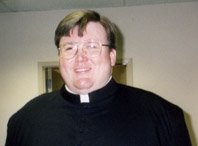
Monday, September 25, 2006

The Obnoxiousness of Holiness

Homily for the 25th Sunday of Ordinary Time

Wisdom 2:12, 17-20
James 3:16—4:3
Mark 9:30-37


How many of you have ever known someone you called a "goody-two-shoes", or something like that? You know the type - the kind of person who delights in calling attention to his or her own goodness: it's not enough that they are good, they need to make sure everyone knows they're good. Usually someone like this is also tattletale: again, it's not enough that they are good; no, they have to make sure that those who aren't as good as them get in trouble for it. We rightly find such people annoying.

But sometimes we are annoyed by good people, and make fun of them, and mock them, because they truly are good. We are annoyed by them because their goodness reminds of our faults. Sometimes we can be annoyed by people who are truly holy because their holiness seems to call attention to our sinfulness. We resent being "shown up" by those better than ourselves.

I had the privilege and good fortune of meeting Mother Theresa twice: once while I was in graduate school and once while I was in seminary. And on both occasions I was awed by her holiness. I was struck by her goodness. Her holiness was so powerful it was as if you could reach out and touch it. And I found that in her presence I wasn't reminded of my own sinfulness or faults, because I wasn't thinking about myself at all: I was thinking about how amazing she was, and how amazing God was.

But not everyone had the same reaction to Mother Theresa. Even a saint like her had her detractors. Even she had enemies. I recall from time to time over the years reading articles and books condemning her for not living up to the world's idea of what she should be doing, and saying the most horrible things about her.

Those who have set themselves on the path of wickedness cannot stand the presence of goodness, and that's what our first reading is about. Listen to these words from the Book of Wisdom:

The wicked say:
Let us beset the just one, because he is obnoxious to us;
he sets himself against our doings,
reproaches us for transgressions of the law...


The world finds holiness obnoxious, finds truth annoying, and finds goodness a reproach.

Now we live in a society which is giving itself over more and more to relativism and secularism: Relativism, as I've explained before, is the belief or attitude that "no one can really know the truth", or "if one person says something is good and another says it is evil, there's no way to tell who is right," etc. Secularism is the attitude that we must keep religion out of our public life: We cannot bring our faith to bear on our political life or priorities - religion is only permissible in the privacy of our own homes and churches. And these two "'isms", relativism and secularism, have in large part led to the decay of morality in our society today.

So it came as no surprise to me to see the New York Times condemn Pope Benedict for "fomenting discord" between Muslims and Christians, It came as no surprise because the Pope's speech, which revealed such a depth of hatred and violence in the Muslim world, was in fact not really a speech about Islam at all. The criticisms of Islam were made almost in passing. The real point of the speech was to criticize the hollowness and emptiness of our modern Western society - the moral and intellectual weakness brought about by relativism and secularism. The Pope's point was that our society's values of "whatever feels good, do it", and "no one can really say what the truth is" and "whatever you do, don't be judgmental", leave us ill-prepared to stand up against the challenge presented by forces like militant Islam.

And the New York Times, as the principal voice of our dominant secular culture, understood very well the real import of the Pope's words: The editorial board of the New York Times are not stupid people: they knew perfectly well where the Pope's criticisms were really aimed. And they felt the need to point our attention in another direction. As one commentor wrote:
"The [New York Times] is carrying out a diversionary maneuver. They recognize that it is the falsity of their ideology of secular relativism that is the main object of the Pope's teaching." They are trying to deflect us away from this truth by pretending outrage at the "offense" offered to a third party.

Truth, goodness, and holiness are not popular in this age of intolerant secular relativism.

The pope's speech is a wake-up call to us. The pope's speech is a call for us to see clearly the signs of the times and be prepared. We live in a society which claims to be just and compassionate, but yet we allow the slaughter of 4,000 innocent unborn children every day. We live in a nation which claims "in God we trust", but yet we have outlawed God from our public schools and much of our public life. If we do not get our spiritual and moral house in order, we will not be able to stand in the face of the challenges that confront us.

In our gospel today Our Lord foretells His passion and death to the disciples. He tells them that He will be killed, and that He will rise again. And after hearing this, after hearing Jesus explain this critical truth, what do the disciples do? They get into an argument about who will be first among them. At the critical moment, the disciples get caught up in a side issue: The disciples didn't "get it". They got lost in a distraction at the critical moment.

The pope is warning us. We cannot get lost in distractions. We cannot get caught up in distractions at the critical moment at which we find ourselves. And most of the values and priorities of our society are just that: distractions.

So how do we "get it"? How do we become prepared for the challenges confronting us, how do we become prepared to be disciples in the world?

Well, the answer is also to be found in today's gospel. The answer is to get close to Jesus: After teaching and healing the multitudes Jesus took the disciples aside to spend time with them, in prayer and teaching. He calls us to be with Him in a similar way. To spend time with Him in the quiet of prayer, in the quiet of meditation, in the quiet of studying His word, so that he may teach us. In Him, and only in Him, will we find what we need to make our way through the trials of this world. By becoming intimate with Him he will give us what we need to deal with the troubles and needs of our own lives, and stand up against the challenge of Islam, and all the other trials of our world.

By becoming intimate with Him we will be strengthened and trained to spread His word, His teaching, to the ends of the earth. Only in Christ will we, and will the world, find peace. Only in His truth will we be able to live rightly with one another. Only in His justice will Justice prevail on earth. He alone: His teaching, His Way, will provide the solution to the challenge faced by our nation, our society, and our world.

Thursday, September 21, 2006

Faith, Works, The Gay Agenda, and the Pope

Homily for the 24th Sunday of Ordinary Time


Isaiah 50:5-9a
James 2:14-18
Mark 8:27-35


This is posted a bit late, I realize, but I had some internet issues which prevented me from posting it in a more timely fashion.


For the past several centuries, Catholics and Protestants have been debating and arguing about Faith and Works. Protestants have been saying that only by faith in Christ alone are we saved, and that our works contribute nothing whatsoever to our eternal destiny. They have accused us Catholics of having a "works-based" theology - that we believe that if we do enough good works we can "earn our way to heaven".

And we Catholics, on the other hand, have responded by saying "no, not at all." Yes, we do believe that it is faith in Christ that saves us, and that without Christ's saving work none of us can be saved. But we hold that our faith must have works to be real faith. Our faith, as St. James says, must be shown in our works. So-called faith in Christ that is not visible in our words, our deeds, our decisions and priorities, is no faith at all. Or, as St. James puts it, faith without works is dead.

It seems to me ironic in this day that this debate is still going on. Ironic because we are approaching a point in our society when both our faith and our works will be forbidden - when we will be prevented from either speaking about or acting on our faith in Christ and His Church. A time may come very soon when our faith will be permitted us only in the privacy of our own homes and churches.

I say this because of the trend of recent events: Last week a woman in England was charged with the equivalent of a hate crime because she distributed a flyer that defended the traditional definition of marriage between a man and a woman, and dared to buttress her position with quotations from scripture. Earlier this year a bishop in Canada was threatened with prosecution and hauled before the Canadian human rights tribunal because he preached in defense of the Christian definition of marriage, and spoke against the so-called right to gay marriage.

If you think such things could not happen here, recall that a few months ago the Archdiocese of Boston was forced by the State of Massachusetts to stop doing adoptions, because the Archdiocese, in conformity with Catholic teaching, would not place children with gay couples. If that's not being prevented from exercising faith by good works, I don't know what is. Earlier this year, a conference of legal scholars debated the conflict between the right to free religious expression versus the "right" to gay marriage. They questioned whether, as such a right became established in law, churches could be compelled to recognize such marriages. They concluded that the right to freedom of religion and this so-called new right were "irreconcilable". What that means, in ordinary language, is that when push comes to shove between the rights of churches and this new "right", the churches will be the losers.

Last week, the Pope visited his native land of Germany, and he gave a lecture to university professors. Now, normally, most of us would think of an academic lecture as something rather dry and probably not very interesting, but this lecture has the whole in a storm of controversy. The pope quoted a 15th century Byzantine emperor who pointed out that in Islam, it is considered OK to convert people by force at the point of a sword, and that such a practice is evil. (By the way, this muslim practice of forcible conversions is not merely some historic aberration. Recall that just three weeks ago two American journalists were kidnapped and forced to convert at gunpoint.) The pope said that violence in the name of God is "unreasonable", that it is contrary to the nature of God and the nature of the human soul.

For pointing out these truths, for saying that violence in the name of religion is not pleasing to God, the Pope has been widely condemned as preaching "hate" for Islam. The Muslim world has erupted in violent protest against the pope, demanding retractions, demanding that the pope "keep in his place", calling for violence against Christians and making threats against the pope's life. Leaders of muslim nations have even joined in, whipping their people into greater fury. Churches have been burned and Christians have been attacked.

I tell you all of these things so that you can see that they are all different aspects of the same phenomenon. All of these things, from the attempt to silence a bishop in Canada to the threats against the pope, boil down to one thing: they are the powers of this world telling the Church, telling believers, to SHUT UP!!! "Shut Up!" they are saying. "We don't want to hear about this Christ! We don't want to hear about good and evil! We don't want to hear about right and wrong! Shut Up and keep your religion to yourselves!" The powers of this world do not want to be reminded of things besides lust, power, greed and domination.

This should not surprise us. For the powers of this world tried to tell Our Lord to Shut Up. They told Him to shut up and stop preaching the Good News, shut up about the Kingdom of God, shut up about righteousness. And they went so far to shut Him up as to put Him to death. They nailed him to a cross and bled Him to death to silence Him. In our Gospel today Jesus foresees his passion and death, and in our reading from Isaiah the prophet foretells of the sufferings of the Christ to come.

But we know how the story ends. We know that the powers of this world were unable to silence Christ. He rose again, and ushered in the Kingdom which will have no end. His word, His teaching, has rung out through the ages and have changed the world. Countless millions have heard and followed His call, even to the point of shedding their own blood in His name. And from the blood of those martyrs the Church has received the abundance of graces, and has grown stronger.

So we need not fear. We need not fear to speak and act on our faith. We need not fear the powers of this world which will try to silence us. They have tried before and failed. We can stand up and speak the truth to power, we can act boldly and with confidence. A couple of weeks ago I said in my homily that to follow Christ was to "live different" - to live in contradiction to the values and priorities of this world. If we follow Christ faithfully, we will live differently, and the world will see it. Many will follow us , but some will reject and oppose us, just as they rejected and opposed the Son of Man. But we can "live different", and say NO! I will not be silent! I will not submit!. In Christ, by the Holy Spirit, we have been empowered, we have been given the authority, to stand before the powers of this world.

My brothers and sisters, we must be prepared: We may be called, in imitation of Our Lord, to "give our backs to those who beat us”." We need not fear even should we be asked imitate Our Lord in suffering for his sake. We need not fear; on the contrary, we can have hope; we can speak and act with confidence and joy. We can have confidence, joy, and hope because we know how the story ends. We know that if we follow Christ, taking up our crosses with Him, we will come with Him to resurrection and glory. We know that in Christ, the one who loses his life for His sake and the sake of the gospel will save it, and in saving our lives participate in saving the whole world.

Tuesday, August 15, 2006

Lex Orandi... Or,
Why Fatihful Liturgical Translations Matter


When Vox Clara met last month to review the changes proposed by the U.S. Bishops to their revised, more faithful translation of the Missale Romanum, Archbishop Hughes, who has been a great proponent of fidelity in translation, remarked about one of the changes that I had previously missed. Archbishop Hughes observed:
"We have a whole generation of priests who have known nothing other than the original English translation of the missal. Because it was done quickly, unfortunately, some important doctrinal points were left out," he said.

An example of where the poor translation of the current Sacramentary misleads is in the penitential rite, where the priest says "May Almighty God have mercy on us, forgive us our sins and bring us to everlasting life." The new translation will say " "May Almighty God have mercy on you and, having forgiven your sins, lead you to everlasting life."

Note the difference: in the old version, as Archbishop Hughes said, "Because of the way it was translated," he said, "people have been led to believe that some kind of absolution was being offered." Of course, that is not the case. The formula in the penitential rite does not confer absolution from sins. But I have myself heard people say things like "We don't need to go to confession as much anymore, because the priest forgives our sins at the beginning of Mass." I have even heard priests (more's the pity) say from the pulpit that confession is only necessary anymore for very serious sins (like adultery or murder), because forgiveness from sins is "built in" to the penitential rite of Mass.

Many have observed that there has a been a decline in the use of the Sacrament of Penance in the last 30 years. I can't help but think that our current inaccurate, insipid, and agenda-ridden ICEL translation of the Mass has been a contributor to that decline. The old saying Lex orandi, lex credendi ("the rule of prayer is the rule of faith") is once again borne out: Change the wording of the Mass, and you will inexorably change what people believe.

I for one can't wait till we get the new Vox Clara translation. I'm praying that Rome, when it reviews the US bishops' amendments, overrides the USCCB and restores "consubstantial" to the Creed.

commenting and trackback have been added to this blog.

Friday, August 04, 2006


Happy Feast of St. John Vianney!

and, By the Way,

Happy Anniversary to Me!

Today is the Feast of St. John Mary Vianney, the Patron Saint of parish priests and of confessors. Here is an article about St. John Vianney from the New Catholic Encyclopedia:

http://www.newadvent.org/cathen/08326c.htm

I consider it a great privilege and blessing to have been ordained on his feast day, and I have ever since adopted him as my special patron.

Five years ago today, in 2001, I was ordained a priest forever by Bishop James Murray of Kalamazoo at St. Augustine Cathedral. Here is a picture of me and Bishop Murray at my ordination Mass:


Please pray for me, that I would serve God's people faithfully and well! Pray for all priests, that we would imitate the faithfulness and zeal of St. John Vianney.

Monday, July 31, 2006

Where Can We Get Enough?

Homily for the Seventeenth Sunday in Ordinary Time

2 Kings 4: 42-44
Ephesians 4:1-6
John 6: 1-15


I would imagine that many of you have heard this gospel a number of times; for some of you, maybe dozens of times. And so I'd guess that over the years some of you have heard a priest or deacon interpret or explain this gospel along these lines:
What was really going on here is this: you see, many people in the crowd had brought food, but they were unwilling to share what they had brought with those who had nothing. So when Jesus inspired that little boy to give his five loaves and two fishes, that inspired the other people who had food to bring out theirs as well, and to share it. And so the real miracle here is that these people stopped being selfish and shared. This isn't a miracle of multiplying loaves and fishes, it's a miracle of sharing and caring.

Now, I'm curious, how many of you have ever heard something like that in a homily before? (Anywhere from 1/4 to 1/2 of the congregation raise their hands.)

Well, those of you who haven't heard this before can consider yourselves lucky, because it's complete nonsense. It's utter hogwash. Now I have no doubt that those who have advanced this interpretation of the gospels meant well, but you can mean well and still be wrong. And to say that the miracle of the loaves and fishes is a miracle of "caring and sharing" is to just plain miss the point.

We can know that the point of this gospel is more than just inspiring generosity by the very words themselves. We're told that the people reacted by saying "truly this man is the prophet". They clearly thought that something extraordinary had taken place. Furthermore, remember that these people were good Jews - they declared that Jesus was "the prophet" because they recalled the incident with Elisha feeding 100 people that we heard about in the first reading. They remembered what the prophet had done, saw what Jesus did, they put two and two together, and realized that a prophet was in their midst.

But, of course, Jesus is even more than a prophet, as we now know. And that brings me to the next point: If you look at this passage in context, you see that it is about something far greater than "caring and sharing". Because what comes just a little later in John's gospel is Jesus' Bread of Life discourse, in which He tells his disciples that He is the true bread from heaven, that His flesh is true food, and His blood true drink, and that he who eats His flesh and drinks His blood will have eternal life.

Jesus' feeding the multitude is a sign and prefigurement of how He will feed us with the Bread from Heaven. Just as He, as the Word of God through whom all things were made, is the source of all our material needs, so He is the source of our deepest need: His life within us. As He provides us with the daily bread that sustains our earthly life, so He provides us with the New Manna, which gives us a share in the very life of the Trinity. As He was the source of sustenance for the multitude, so is He the true source for what we really need: Himself.

There is a word that occurs a couple of times in this gospel: that word is "enough". Jesus asks Philip "where can we get enough for them to eat?" Now, as is so often the case, Our Lord's words are working on more than one level: The first level is the obvious, everyday meaning: "how are we going to feed all these people?" But there is a deeper meaning, a deeper question: Where can we get enough? Where can we find sufficiency? Where will we find satisfaction? And the answer, in this passage, and in the Bread of Life discourse that follows, is that He alone can supply our needs. Only in Christ will we find sufficiency.

Have you ever noticed that no matter how rich some people get, no matter how much money and possessions they have, they always want more? Billionaires like Bill Gates or Donald Trump, although they have more than any of us could imagine, nonetheless continue to try to amass even more wealth, try to expand their fortunes and make their corporations even larger. They'll get an even better private jet, an even larger yacht, another vacation home in the Swiss Alps. Now, we can't be too hard on those billionaires, though, because in reality you and I aren't much different. The difference between us and them is only one of degree and scale, not a difference in kind. For we too, in different and smaller ways, never seem to have enough. We'll get that new pickup truck we've been wanting, and then decide we want to have a bigger boat for that truck to tow. Or we'll get that new boat, and then start thinking about that new snowmobile we want. We'll get the new snowmobile, and then realize that we really "need" a new set of golf clubs as well. We never seem to have enough.

Well, that's because our ultimate need cannot be satisfied by anything in this world. As one of the saints said, we all have a God-shaped hole within our hearts. We have a void in our soul that only God can fill. But one of the effects of the Fall and Original Sin is that we are always trying to fill that hole with other things. And no matter what we try, it won't work. Only God can fill that void, only God can satisfy that deepest desire of our hearts. And Christ Jesus came among us to plug that hole, to fill that void. And He gives us Himself as the true Bread of Life, to give us here and now a foretaste of that satisfaction we will know in its fullness only with Him in heaven.

Jesus asked, "Where can we get enough?" By feeding the multitude, Jesus shows that He is the source of our earthly needs. But this sign points to a much greater reality: that He alone is the one who can truly feed us, He alone can truly satisfy, He alone will fulfill us. While we are on pilgrimage in this world, He will give us Himself as the Bread of Life to sustain and empower us, so that when we arrive at the consummation of all things in the next, we will be able to say, "At last, I have enough".

Friday, June 30, 2006

Thoughts From The Abyss

"How do you know it won't work?"

This, from the guy who was guest-hosting last night's Michael Savage Show (Okay, I admit it, it's an occasional indulgence of mine). This guy (Savage is on vacation) was venting his rage over the Supreme Court decision blocking the Bush administration's trials at Guantanamo, because he (correctly) perceived that it would make the torture of captured suspected terrorists more difficult.

The host's argument consisted of "if your mother and father were being held by terrorists, and torture might get information that could save their lives, wouldn't you do it? Don't you love your mother and father?" A caller objected to this, pointing out that torture isn't reliable.

And so, straight from the abyss, came the line "How do you know it won't work?" And this was followed a few moments later by "If there's a chance it would save lives, shouldn't we do it?"

I'm used to hearing outrageous things on Savage's show - that's part of the entertainment value. But last night went beyond outrageous to just plain evil.

In this guy's mind, not only is it OK to torture known terrorists whom we know to have vital information, but we can torture people on the chance that we might get information.

My friend Mark Shea has pointed out, ad nauseam, that the apologists for torture are essentially arguing "let us do evil so that good may come of it."

But this blowhard, and his acolytes among so-called conservatives, aren't even that rigorous. They're willing to do evil so that, maybe, some good might come of it.

I describe these thoughts as "from the abyss" because this is the logic of Hell. It is, in fact, a hell-ish inversion of morality. From the progression of "let us do evil so that good may come of it", to "let us do evil on the chance that some good might come of it", it is no great step to saying "let us do evil, because they're the enemy and we can." Which, come to think of it, has happened already, at a place called Abu Ghraib.

Note too, the implication in this twisted logic, that the burden of proof is no longer on those who would use and justify torture, but on those who oppose it. "Why shouldn't we do it?"

This is how morality is ground down, and this is how the moral fiber of a society is dissolved from within. Such barbarism will destroy us far more completely than all the legions of Al Quaeda ever could.

Friday, June 23, 2006

The King's Good Servant, But God's First...

Homily for the Feast of St. John Fisher, Bishop and Martyr,
and St. Thomas More, Martyr


Last week, an official of the Metropolitan Transit Authority in Washington, D.C. was fired by the governor of Maryland. The Metro Transit Authority runs the subway and bus mass-transit system in Washington, D.C. and its suburbs. This official wasn't fired because he was incompetent. He wasn't fired because he was doing a bad job. He wasn't fired because of corruption, or any other misconduct. He wasn't even fired because of budget cuts or other financial problems. No, he was fired because, on a local cable tv talk show, he expressed an opinion. He described homosexual activity as "sexual deviancy", and stated that he held this opinion as part of his Roman Catholic faith. For this, homosexual activists denounced his statement as "beyond the pale", demanded his firing, and the governor complied. For expressing the view held and taught by the Catholic Church for two millenia, and reiterated by our present Holy Father, this man was viewed as "beyond the pale" and unfit for public office.

In the early 16th century, John Fisher, the Bishop of Rochester, England, and Thomas More, the former Chancellor of England, also were deemed to be "beyond the pale" by those in power. And they were seen as threats because they held to the teaching of the Church, and refused to give in to pressure to compromise or accomodate King Henry VIII's efforts to remake the Church in his own image.

Now, I am not equating this official in Maryland with Saints John Fisher or Thomas More. The stakes were far higher for them. Thse men not only lost privilege, preferment, and position, but they paid for their fidelity with their lives. They did not merely express an opinion, but stood nearly alone against all the men that they knew, had worked with, and had formerly respected.

But the parallel exists, nonetheless. For today, just as in the 1500's, there are those who would remake the Church in some new, more convenient, image. There are many, some even within the Church, who urge her to be more "moderate", to "soften" her voice, to "update" her teaching to something more acceptable to the opinions of our elites. There are those who would tell her, and us, to simply shut up and keep our beliefs to ourselves. They declare our views "beyond the pale", and threaten - sometimes subtly, sometimes openly - that if we persist in holding them, "bad things" will happen to us.

And "bad things", indeed, can happen for being faithful to the Church and her teaching. Such has always been the case. In different places and times, men have had their property confiscated, were imprisoned, and gave their lives for their faith in Christ and His Church. They understood, as St. Paul tells us, that our true citizenship is not in any earthly nation, but in heaven.

There is, of course, no essential conflict between being a good citizen and being a faithful Catholic. But when the State declares itself, either in word or by action, to be at enmity with Christ and His Church, we must remember where our true citizenship belongs.

St. Thomas More, before he was led off to be executed, said "I am the King's good servant, but God's first." We are all Americans, and we would all serve our nation gladly and gratefully. But when our governments champion the death of innocents under the banner of "choice", when our elected officials advance immorality and perversion and call it "diversity", and when the organs of our public life attempt to silence us and punish us for the Faith we hold, we must be prepared to part ways.

Make no mistake, there is little room left for half-measures or compromise. It is much later in the day than we suppose. We must be prepared, like St. Thomas More, to say, "I am a loyal American, but a disciple of Jesus first", or "I am a good citizen, but a citizen of Heaven first". We may, like many before us, pay for our fidelity with the loss of position or worldly regard. We may even, someday, be called to offer our lives. But we know, as did John Fisher and Thomas More, the truth of our Lord's words that "he who loses his life for my sake will find it."

Tuesday, June 13, 2006

Fr. Rob and Mark Shea's Amazing Adventures, Cont.

As Mark mentioned over on his blog, we had a day of adventures in the country last Friday. First we went to have lunch at Crane's Pie Pantry:


The Entrance to Crane's Pie Pantry


Crane's makes all their own pies, preserves, apple cider, etc. from their own orchards, which surround the shop for acres and acres. Mark and I enjoyed their home-made apple cider (like drinking an apple!), their home-made apple butter bread (awesome), and their pies (sublime). Mark had blueberry pie, and I had the apple.

Here we are, enjoying our repast:


As you can see from the photo, the restaurant is filled with all kinds of vintage Americana. But the main attraction is the food: deee-lish!

Along the way, we also did some sight-seeing: We went down and walked along the Kalamazoo River, and looked out over the fens that (presumably) gave Fennville its name.

From Crane's pie pantry, we proceeded down the road to the Fenn Valley Vineyards. There we imbibed a fair amount of the grape. Michigan has quite a respectable and growing wine industry. Fenn Valley is one of the best examples of this. They have a Riesling that would hold its own against anything from Washington State or Germany, and a Meritage ('04 to be released this July 8) that compares favorably to many good Bordeaux I have drunk. Mark especially liked their Port (while a Ruby, it has reminiscences of a Tawny), as did I.


Mark Enjoying a Little Nip

Where'er a Catholic sun doth shine,
there's always laughter and good red wine.
At least I've always found it so.
Benedicamus Domino!
— Hilaire Belloc


I had a couple of bottles sent home to Mark to remember his visit by. So we ate, we saw some scenery, we drank, and a good time was had by all!

Next installment: things get ugly...

Monday, June 12, 2006

The Mark Shea - Fr. Rob Travelling Apologopolooza

What happens when two fat Catholic guys, one of them a famous author and apologist, and the other a not-quite-so-famous priest and author, get together in Western Michigan? Well, all kinds of hijinks!

Mark was here last Wednesday through Saturday, and Mark gave several talks, and we had all kinds of fun!

On Thursday, Mark and I had lunch with Fr. Robert Sirico of the Acton Institute and the promising new Proto-Oratory of St. Philip Neri (which had two new priests ordained last month).

Fr. Sirico and I have been friends for a number of years - it was largely due to him that I am now a priest of the diocese of Kalamazoo - and he and Mark both wanted to meet each other: So here we are, as Mark said, proving that we really are part of a Catholic neo-con conspiracy:


Lunch?... Or Catholic Neo-Con Cabal?


Also joining Mark, Fr. Sirico, and myself were Fr. Christian Johnston (front left), a recently-ordained Kalamazoo priest who is a rising young member of the Catholic neo-con clerical cabal, and Br. Basil (back left), who has lately joined the Oratory, and is therefore also to be suspected.

On Thursday night, Mark gave his "DaVinci Deception" talk, and told us why Dan Brown's book, and Opie's lugubrious movie adaptation, will make you much dumber than you are already.


"Dan Brown Thinks You're Stooopid"


Mark dazzled us with his wit and erudition, and a good time was had by all.

More photos and zany antics later!

Tuesday, June 06, 2006

Speaking of Mark Shea...

I'm pleased as punch to announce that he is coming to my humble parish of St. Stanislaus this Thursday - Saturday, June 8-10. On Thursday, June 8 at 7:00 PM he will speak on "The DaVinci Deception": dispelling the falsehoods and foolishness in the dumb novel and even dumber movie "The DaVinci Code". On Saturday, June 10, Mark will give two talks: "Why Be Catholic?" and "Mary: The Real Sacred Feminine". Saturday's event will begin with Mass at 9:00 AM followed by the presentations. If you're in Western Michigan, come on over! Be enlightened and entertained!

Separated At Birth?

A few people have remarked on a certain resemblance between another Catholic writer and blogger (he's far more prolific at both) and myself:


Hmmm... you be the judge.

As far as I know, there's no relation between Mark and I. Perhaps there's some random "fat catholic guy" gene that we share...

Oh No, No, No, I'm A Rocket Man

As I mentioned in the previous post, last Friday was the last day of school here at St. Stanislaus. As my long-time readers know, one of my hobbies is building and flying model rockets. So, I gave the kids at the school a little demonstration and fly some of my rockets for them.

These rockets are built from kits, or from scratch. They use solid-fuel single-use engines. Some of them can go up to 3,000 feet high. I didn't launch any that high Friday - if you're going to launch something that high, you'd better be prepared to recover it up to 1/2 mile away, depending on wind drift!


Here I am showing them my "Honest John" rocket, a model of the '70's era Army artillery rocket of the same name. This is a big one, that's very impressive going up. Because it's so large, it takes a little while to get going, and you can see its lift-off very well. It won't go that high, though. The highest I've ever had it go is about 400 feet.


This is my newest-built rocket, the CFX-6. It stands over 6 feet tall. The kids were very impressed by it!


As you can see, I had the kids' rapt attention!


Here we are outside, and I'm prepping the "Honest John" for launch with the help of a young assistant. I would have liked to have a picture of this rocket in flight, but it suffered a mishap: when the ejection charge blew the nose cone off, it tore the shock cord holding the parachute to the main body tube right out of its mount: It plummeted to earth from about 300 ft. and sustained major damage.


This is my new rocket, the CFX-6, on the launch pad before its maiden flight. It went up flawlessly, a picture-perfect flight! I also allowed some of the kids to launch the rockets. They're electrically fired from about 25 feet away, so it's reasonably safe.


Here's the CFX-6 on its way back to earth, gently floating down on its parachute. I was impressed by how high it went up. Usually the larger rockets don't go that high, but this one went up about 600 feet.


It was a fun morning! I got to play with my rockets, teach the kids something, and the kids had a memorable last day of school!

It's Good To Be The Pastor, Part IV

Today is one of those beautiful late spring mornings: The sun is shining, it's cool and clear, I can hear the birds in the trees,and there's no sound of mowers or other power equipment to mar the calm of the day. Indeed, the only sound other than the birds is coming from the church, which I have opened up to air out: one of my parishioners is a Master's student in piano at the University of Illinois, home on break. She's in the church right now playing a Beethoven piano sonata, and the music is wafting across the driveway into my house. It's downright idyllic.

And I'm glad for an idyllic morning today, because I've been absolutely buried, chin deep in work since I came back from Nebraska last month (more about that later). Between First Communions, Confirmations, Graduations, etc. (remember that since I have a mission parish, everything is doubled), I've been swamped. Oh, and did I mention that my organist quit just before Ash Wednesday, and so I've been acting as my own Music Director since then? I've been able to arrange for substitutes and other stopgaps, but only with constant effort. However, that situation is well in hand - I've been interviewing candidates for the last two weeks, and I'm close to hiring someone. And thank God! I'll be glad to be able to turn that over to someone I can rely on.

Friday was the last day of school here. So now there really is quiet outside. No sound of kids playing games in PE, or during recess. If we didn't have a school at my parish, I think it my get just a little too quiet out here too often. I'm glad of having the summer break (and having been a teacher, I know they're glad of it too), but I'm even more glad that I have a school here at St. Stanislaus.

So, now that things have settled down a little bit, I'm planning on doing some blogging again. There's quite a bit of pent-up ideas I've been wanting to blog about. Sorry to have been away so long, but now I can give some time and attention not only to blogging, but some other writing projects I have in mind.

Monday, April 03, 2006

I'm Going To Be On The Radio, Again!

Once again, I'll be on the Al Kresta Show this afternoon.

I'll be on in the 4:00 PM hour, and we'll be following up on our discussion last time, where we talked about the Vatican's "Instruction Concerning... Persons with Homosexual Tendencies", and my article "Homosexuality and the Seminaries: How to Read the New Vatican Instruction", which appears in the February - March issue of Crisis Magazine.

Today, we'll have a more wide-ranging conversation about seminary life and the state of the seminaries in the US.

If you don't have a local Ave Maria Radio affiliate in your area, you can listen live on the internet at:

http://www.avemariaradio.net/catholic-online-radio.php

Blogger Comments Enabled

I had been using Squawkbox comments, but Squawkbox has given its last squawk.

To use Blogger comments, click on the time stamp at the bottom of the post, and then click on the "Post a Comment" link.

Atom Feed Syndication Enabled

I tried doing this once before, but apparently it didn't work.

Now, I really do have the Blogger Atom Feed enabled.

You can get the Atom Feed at this link.

Friday, March 31, 2006

One Year Ago Today...

Terri Schiavo, an innocent woman, died as a result of a judge's order permitting her husband to starve and dehydrate her to death.

In commemoration of her death, I am running on my blog today my Catholic World Report article from May 2005, titled "The Death of Terri Schiavo. This is the first time this article has appeared online. I hope, in reading it, that you will be reminded of how such a grave injustice was done, and the half-truths, deceptions, and outright lies that accompnied and justified it.


The Death of Terri Schiavo - Part One

This article first appeared, in slightly different form, in the May 2005 issue of Catholic World Report. Due to the size of the article, it is continued in a second post below.


If the courts had reconsidered the facts, if doctors had followed procedures, if reporters had asked obvious questions, if bishops had spoken out boldly - a gross injustice migfht have been averted.


On March 31, shortly after 9:00 AM, Terri Schindler-Schiavo died, as the nation, and even the world, watched. She died in the hospice bed to which she had been confined for over five years. Her death has been hailed as a victory for the "right-to-die" movement, and denounced by others as "judicial homicide".

As she lay dying, the media kept a grim countdown of the number of days she had been without food and water, and pundits opined on the cable news shows and in the newspapers about "death with dignity" versus the sanctity of life. Her death, and the circumstances surrounding it, was one commented upon more widely than most in modern history, and yet also probably one of the most misunderstood.

Terri's feeding tube was removed, as Florida Circuit Court Judge George Greer ordered, on March 18, shortly after 2:00 PM. Terri's family - her parents Bob & Mary, and her brother and sister Bobby and Suzanne - had been with Terri for most of the day. Terri had received her last feeding at about 11:00 AM. The Schindlers were told, by the police officers who maintained constant guard outside Terri's room, that they would have to leave. At this point, medical personnel removed the percutaneous gastrostomy (PEG) tube which had been providing Terri's nutrition and hydration for some 15 years. From that moment on, Terri would receive no water or food, and thus began the "dying process" which would end 13 days later.

For the first few days, Terri appeared more or less "normal". She continued to interact with her family, and appeared alert. But after 3 or 4 days, the change in her condition became noticeable: Her skin started to appear dry and lifeless, and she became less responsive. By the seventh day, the Schindlers were telling me, in our daily telephone conversations, that Terri had become "lethargic", and within a few more days, almost entirely unresponsive. Sometime around day 10 or 11 Terri suffered renal failure, which led swiftly to, and was the immediate cause of, her death.


The Last Legal Battles

In the weeks prior to the removal of Terri's feeding tube, and even while Terri lay dying, the Schindlers waged a legal battle to keep Terri alive. On February 25, Judge Greer ordered that Terri's feeding tube was to be removed three weeks hence. He also ruled that he would not hear any further motions or petitions from the Schindlers, except as they related to Terri's "dying process" and her final disposition. As the Associated Press reported:
The judge wrote that he was no longer comfortable granting delays in the family feud, which has been going on for nearly seven years and has been waged in every level of Florida's court system. He said the case must end.

"The court is no longer comfortable granting stays simply upon the filings of new motions," Greer wrote. "There will always be 'new' issues."

The Schindlers, in spite of Judge Greer's decision to refuse new motions, nonetheless filed several in the week following Judge Greer's setting of a new death date. Among these were petitions for new medical evaluations of Terri, a petition to allow Terri and Michael to be divorced, and a request to remove Michael as guardian.

Initially, Judge Greer held to his stated intent and dismissed these motions without hearing their merits. However, when threatened with the prospect of a successful appeal by the Schindlers on due-process grounds, Judge Greer relented and allowed most of the Schindlers' motions to be heard and argued. In the end, though, the hearings made no difference in the outcome of Judge Greer's decisions. During the week of March 7, Judge Greer:
Denied the Schindlers' motion to compel Michael Schiavo's deposition in their case challenging his guardianship.

Denied the Schindlers' motion for a divorce of Terri from Michael. The motion was denied on "Catch-22" grounds: Under the law, only spouses can request a divorce from each other. Since Terri could not speak for herself, she could not request a divorce. Only Michael, as guardian, could make such a request on Terri's behalf. Needless to say, Michael chose not to.

Then Judge Greer:
Denied the Schindlers' motion to remove Michael as guardian.

Denied the Schindlers' motion that attempts be made to feed Terri by mouth once the feeding tube was removed March 18. George Felos, the attorney for Michael Schiavo, argued against this motion by asserting that if Terri was fed by mouth, she might aspirate the food and die an "extended, gruesome death". This line of reasoning struck many as bizarre, given that Felos was seeking Terri's death via starvation and dehydration over the course of a week to ten days.

Judge Greer also denied the Schindlers' request that Terri be allowed to receive Viaticum (Holy Communion for the dying) by mouth. He ruled that if Terri was to be given Communion, it had to be done via her feeding tube.

He denied the Schindlers' motion to allow their daughter to die at their home, noting the parents could visit the Pinellas Park hospice where she lives.

Judge Greer denied the Schindlers request to have Terri's intact body interred: He confirmed Michael's order that Terri was to be cremated upon her death. He also denied the Schindlers motion to allow Terri to be buried in Florida. Michael intends to inter her cremated remains in Pennsylvania, where they are both from.

Judge Greer's ruling against the Schindlers on the matter of feeding by mouth seemed the most indicative of his frame of mind: By precluding attempts, as a "last ditch" measure, to feed her by mouth, the Judge showed that his object was not merely to stop what he might (erroneously) argue is an "extraordinary" means of support, but to make certain that Terri died. One might make an analogy to someone on a respirator: frequently respirators are removed from patients, but sometimes they continue to breathe on their own without support. It is as though a judge were to order not only that a respirator be removed, but that the patient's mouth and nose be sealed with duct tape, just to make sure he can't get any air by any means.


Turning to Lawmakers

Following an unsuccessful round of appeals in the Florida and Federal appellate courts, the Schindlers' efforts turned to obtaining legislative relief. The Schindlers lobbied the Florida legislature to pass a new version of "Terri's Law", which had been struck down as unconstitutional by the Florida Supreme Court. But while the Florida bill seemed to stall, the Schindlers made more progress in the U.S. Congress, where measures intended to grant a new review of Terri's case had been introduced in the House and Senate. The measure introduced in the House, the Incapacitated Persons Protection Act, was a broadly written bill that would have given the right to a Federal hearing to a whole class of persons facing death by removal of nutrition and hydration. The Senate bill was more narrowly construed, providing relief to the Schindlers alone.

Americans were treated to a topsy-turvy public debate in which each side seemed at times to argue according to principles historically embraced by their opponents. Republicans such as House Majority Leader Tom De Lay decried the unaccountability and activism of our courts, while at the same time arguing for the passage of a bill which would bring Terri's case back before those same courts. Democrats, who have in the past defended intervention by Federal courts in matters of state policy, found themselves arguing for State's rights, holding the decisions of the Florida courts sacrosanct.

The debate over the bills went on past the removal of Terri's feeding tube, and indeed, it seemed at points that no measure would be passed. Bobby Schindler went to Washington to lobby for the bills in the House and Senate, and met with every single member of both houses. Congressional sources described Bobby as "very persuasive" in his meetings with legislators. In one meeting, as he laid out the details of Terri's case, audible gasps were heard several times as the members were told of the string of injustices and errors which led to her judicially-ordered starvation.

In spite of the Republican support and Bobby's persuasiveness, there was formidable opposition to passing a law to save Terri. The ringleader of the opposition to the Senate bill, according to Bobby, was none other than Senator Ted Kennedy, the senior Catholic senator from Massachusetts. It struck me as ironic that Kennedy, whose opposition to the death penalty is passionate, led the opposition to a law that would have given Terri the same right to a hearing as condemned criminals. The opposition in the Senate led to the adoption of compromise bill which gave relief to the Schindlers alone, and not the broader protection offered by the House bill.

In the early hours of March 21, the House passed Senate Bill 686, "For the Relief of the Parents of Theresa Marie Schiavo". This bill provided for a de novo review of Terri's case, meaning that all of the issues and facts surrounding her case would be reconsidered. This de novo review was essential: Although Terri's case had come before several state and federal courts numerous times, all of the judges' opinions were based on the same set of factual findings made by Judge Greer in his 1998 decision granting Michael the right to remove Terri's feeding tube. In that decision, Judge Greer ruled as a matter of fact that Terri was in a persistent vegetative state, (PVS) and that Terri had indicated a wish not to go on living should she become dependent on artificial nutrition and hydration. As I have written before, both in CWR (November 2004) and in Crisis Magazine, these ruling were arrived at in a manner which rode roughshod over rules of civil trial procedure, and with what seemed to be a blind eye to the mountain of evidence contradicting them. The problem the Schindlers have faced, as I wrote in a recent article at National Review Online:
is that in our legal system, once a judge has ruled on a matter of fact, it is very difficult to revisit such a ruling. Lawyers have a rule of thumb that trial courts hear and rule on questions of fact, and appellate courts rule on questions of law. It is unusual for an appellate court to overturn a lower court’s ruling based on errors regarding issues of fact.

And so, at every turn in this case, the Schindlers had to try to undo the faulty rulings of fact previously issued by Judge Greer. They had to go back before Judge Greer himself and try to convince him that he was wrong, and should undo his own rulings. Judge Greer proved unwilling to do so. Higher courts were unwilling to overturn a trial judge’s rulings of fact and so, ruled against the Schindlers. The de novo review promised by the Federal "Terri's Law" held out the only hope.


A Partisan Struggle

As we all know, that hope was never fulfilled, as the de novo review never materialized. It was well known that many jurists took offense at the passage of Terri's Law, which they interpreted as a Congressional attempt to dictate how they should exercise jurisprudence. Speeches made by Tom De Lay and Senate Majority Leader Bill Frist decrying "activist judges" and an "out-of-control" judiciary solidified the impression that the battle over Terri Schiavo's life had become part of a political struggle: Those on the right saw Congress as trying to check the abuse of power by unaccountable judges. Those on the left saw the ability of judges to enact social change by the exercise of their legal authority imperiled by Terri's Law.

The reaction in the judiciary was evident from the outset. Firstly, federal judges seemed to completely ignore the provision in the new law to grant the de novo review. The "fresh look" at all of the facts and issues of Terri's case simply didn't happen. Instead, the judges confined themselves to re-examining the issues of law, just as they would have if the federal legislation had never passed. But the direction that events would take was indicated by remarks made by a federal judge at the conclusion of the first hearing held after the passage of the federal law. Federal Circuit Judge James Whittemore declined to rule immediately on the Schindlers' request to re-insert Terri's feeding tube, pending new litigation. In a comment that seemed motivated more by pique than any legal considerations, Judge Whitttemore declined also to indicate when he would issue a ruling. He said "I will not tell you when, how or how long it will take."

As it turned out. Judge Whittemore declined altogether the Schindlers' motion, and declined to allow the re-insertion of her feeding tube in light of further appeals. This act set the tone for the judicial decisions to come. In several forays up and down the federal courts system, the Schindlers were rebuffed at every turn. The Schindlers' attorney, David Gibbs, announced on March 28 that their legal remedies were exhausted, and they would file no further motions or appeals.


Errors of Fact

Terri's fate can be seen, ultimately, as the result of Judge Greer's dubious findings of fact at the 2002 evidentiary hearings, at which he concluded that Terri was in a PVS, and that she would not want to live in her disabled condition. The facts were crucial in deciding Terri's fate, as the result of Judge Greer's factual errors was fatal for Terri. These errors filtered into the public debate as well: there can be little doubt that much of the press coverage and commentary simply did not get the facts right concerning Terri's case, and this stream of misinformation weakened pubic support for Terri's cause.

In my 2004 CWR article "Saving Terri's Life" I described how the mainstream media was often content, during the 2003 conflict over the removal of Terri's feeding tube, to simply parrot the characterizations of Terri's case presented by Michael Schiavo and his attorneys rather than actually question their assertions and dig more deeply into the issues. Unfortunately, in this last round of debate and controversy, little changed. Some news outlets, such as Fox News, did a reasonable job of covering the issues fairly, and giving the pro-life position a fair hearing. Some commentators and pundits, such as Fox's Sean Hannity, took on Terri's cause as their own, and became powerful champions for her life. However, much of the media were content to merely repeat or even amplify the "memes" about Terri's case.

(A "meme" is an idea which may have little foundation in actual fact. being the product of rumor, innuendo, or gossip. However, because the idea is in some way convenient or useful, it is picked up and spread casually without investigation, and gradually acquires a patina of truthfulness, simply because it has been repeated so often. Memes become pervasive ideas, and frequently have the power to change public attitudes and perceptions. )

There were a number of memes circulated regarding Terri's case and repeated unquestioningly by the mainstream media. Among these were the assertion, frequently heard on cable talk shows, that "12 (or 16 or 19) judges have heard the case and ruled against the Schindlers." This assertion was offered as an argument for accepting the decision to remove Terri's feeding tube as one arrived at responsibly. But, of course, the number of judges who agree with a decision is irrelevant if all those judges' rulings are based on the same factual errors. Which was precisely the case regarding Terri Schiavo. As related above, all of the subsequent rulings on Terri's case were based on the same fact findings made by Judge Greer, which findings were never re-examined.

Another meme frequently asserted was that "Terri was bulimic." Bulimia is an eating disorder characterized by "bingeing and purging", and can cause serious health problems. This meme is interesting in that it was often introduced as a way of "blaming the victim": the idea being that somehow Terri brought her situation on herself, and therefore deserved her fate. It is also is interesting in that it simply has no foundation in actual fact or evidence. The "Terri was bulimic" meme was the product of speculation offered by Michael Schiavo and his attorneys as to the cause of the cardiac arrest which led to Terri's brain damage. However, there was no talk of Terri suffering from bulimia or other eating disorders among Terri's family or friends before her injury. The assertion did not surface until well after Terri's collapse. Furthermore, there is no actual medical evidence of such a condition, unless you credit the circular reasoning employed by advocates of Terri's death: In this argument, the fact (true) is asserted that bulimia is a known cause of electrolyte imbalance of the sort that caused Terri's cardiac arrest. Then the fact that Terri suffered an electrolyte imbalance is adduced as evidence that she was bulimic. Such an argument would not pass Logic 101, but the power of the meme is that is unexamined.

I personally encountered the power of this meme during a radio talk show interview. In the course of the interview, one of the hosts brought up the assertion that "Terri was bulimic". I pointed out the lack of evidence for the assertion, and the fact that it originated in speculation. The host responded by pointing out that she had read this same "fact" in "a number" of published articles. I answered by describing that memes worked in precisely this manner, and by demonstrating the circularity of the reasoning. After all was said and done, she rejected my argument saying, "well, I have to go with what the published reports indicate rather than what one priest says."

Far more damaging, however, were the memes circulated regarding Terri's medical care and diagnosis. I frequently encountered assertions that all medical options had been exhausted in Terri's case, and that Terri had had the best of care. Both assertions were simply false.

The fact is that Michael Schiavo, as Terri's guardian, allowed no therapy or attempts at rehabilitation since 1992. He also forbade the physical therapy to minimize contractures and muscle atrophy that is commonly provided even for bedridden patients in a vegetative state.

Furthermore, the idea that Terri has had the "best of care" is belied by the fact that, for the last five years of her life, Terri was at a hospice rather than at a nursing home or hospital. By definition, hospices offer a lower "standard of care" than even a nursing home. Hospice care is intended for patients who are recognized as terminal; only basic nursing and palliative care is provided. Therapeutic measures aimed at improving a patient's condition are not offered by hospice.


An Irresponsible Diagnosis?

The most misleading memes surrounded Terri's diagnosis and medical condition. Readers and viewers of the mainstream media were barraged with reports that Terri was in a PVS, frequently without even the mention that this diagnosis had been challenged and was doubted by responsible doctors. I frequently encountered statements such as "all the doctors" who had examined Terri concluded that she was PVS", or a cleverer version that gave at least a nod to reality: "all the reputable doctors who examined Terri found that she was PVS."

But such assertions ignore a disturbing set of facts which I discovered in the course of my research for the National Review Online article mentioned above. In my discussion with a number of board certified neurologists, some of whom are professors of neurology at major medical schools, I learned that the diagnoses of the neurologists who appeared in court for Michael Schiavo, and the one appointed by Judge Greer, were arrived at in a manner inconsistent with sound neurological practice, and which did not live up to the guidelines established by the American Academy of Neurology.

Firstly, though the doctors who examined Terri on behalf of the Schindlers asked for Terri to be given an MRI (Magnetic Resonance Imaging) scan, Judge Greer refused it, as the "star" medical witness for Michael Schiavo, Dr. Ronald Cranford, said that an MRI was unnecessary. Lower quality CT (computer aided tomography) scans were done instead. And who made the decision regarding which medical tests Terri was to have? Judge Greer did. According to Patricia Anderson, the attorney for Bob & Mary Schindler until the fall of 2004, Judge Greer went down the list of tests requested by the doctors and himself "checked off" which ones Terri would receive. Judge Greer's method led Anderson to comment that the judge "practiced quite a bit of medicine in this case."

Many neurologists, as the facts about Terri's diagnosis came out in the weeks before and after the removal of her feeding tube expressed dismay with the lack of advanced imaging procedures. Indeed, nearly fifty neurologists, all of them board-certified and many of them leaders in the discipline, came forward and either offered, or expressed a willingness to offer, affidavits calling on the court to allow new neurological exams of Terri, including advanced imaging tests such as MRI. The neurologists I have interviewed all acknowledge that the diagnosis of PVS is primarily "clinical": that is, arrived at mainly on the basis of examination rather than from tests. However, many also asserted that they would themselves order an MRI in a case like Terri's, when life and death are at stake. As one of them, Dr. Peter Morin, explained, an MRI is very useful in "determining the extent of brain injury," and in assessing the likelihood of the patient's improvement or recovery. Dr. Kalarickal Oomen, a professor of neurology at Oklahoma University Medical School, added that "MRI in many cases gives much better anatomic detail than CT, and is far superior" to the CT scans which were done on Terri in 2002. The value of MRI in assessing brain injured patients such as Terri led several neurologists to go so far as to characterize a decision to deliberately forego one (as was done with Terri) as "not responsible".

The guidelines laid down by the American Academy of Neurology for diagnosing patients suspected of being vegetative remark that the diagnosis of PVS can require months to establish. These guidelines also call for careful, repeated examinations of the patient. Neurologists also explained that these repeated visits need to be conducted at varying times and under different circumstances: Dr. William Bell, a professor of neurology at Wake Forest University Medical School, explained that brain-injured patients have severely disrupted sleep/wake cycles, and that a doctor can examine such a patient on one day and find him seemingly unresponsive, but return at a different time the next day and find the patient quite alert and aware of his environment. A 1996 article published in the British Medical Journal , which reported a 43-percent error rate in diagnoses of PVS, also cautioned that a "bedside assessment" alone was "inadequate" to make a diagnosis of PVS.

But the exams conducted by the three doctors retained by Michael Schiavo and the court were in fact nothing but the kind of "bedside assessments" deemed "inadequate" in the BMJ study. Each doctor examined Terri for no more than 45 minutes, on only one occasion. Neurologists I interviewed did not object to the length of the exams, saying that a neurological exam could be conducted in 30 - 45 minutes. However, all of them expressed dismay at the lack of repeat exams. Dr. Mouhammed Kabbani, of the University of Missouri Medical School, said "A single exam for 45 minutes is not enough. There should be continuous observation over a few days," he added, "to make sure there is, or there is not, meaningful and reproducible response."

The claims regarding the reliability of Terri's diagnosis of PVS turn out, on further examination, to be as groundless or exaggerated as the many other memes propagated by the media. Dr. Bernardine Healy, a former director of the National Institutes of Health and medical columnist for U.S. News and World Report , lamented that the medical procedures followed in Terri's case were simply "not good enough" for a situation "when life--and death--are on the line." While some reporters and commentators, such as Dr. Healy, attempted to stem the tide of misinformation, they appear to have been drowned out. This lack of diligence by the press, and, in many cases, seemingly willing cooperation with the pro-death agenda, led Nat Hentoff, the acknowledged leftist and avowed atheist writer for The Village Voice , to describe the coverage of Terri's case as "disgracefully ignorant."


The Pro-Life Presence

The opposition to Terri's starvation and dehydration was spearheaded by the pro-life movement, including many Catholics. Fr. Frank Pavone, the national director of Priests for Life, was frequently with the Schindlers visiting Terri, and joined those keeping vigil outside Terri's hospice, He also appeared frequently on television, speaking out for Terri's right to life. Fr. Thomas J. Euteneuer of Human Life International also came to Florida to lend support to the Schindlers, and made several media appearances on their behalf.

As I remarked in my CWR article last November, the movement to save Terri brought Catholics and Protestants together in a remarkable display of ecumenism in its best and truest form. Indeed, not only Catholics and Protestants, but large numbers of Jews and Muslims also gave witness to the dignity and sanctity of human life. There were a number of prominent Protestants who provided leadership in mobilizing support for Terri's cause, and presented the case for Terri's life to the public. Perhaps the most passionate and eloquent of these was Dr. James Dobson of Focus on the Family. Dr. Dobson's stature among conservative Protestants is perhaps unmatched, and he became the de facto Evangelical voice for Terri in the media.

While Fr. Pavone's leadership and voice was invaluable, the case for the dignity of life was weakened by the lack of a strong and uncompromised witness from the Catholic hierarchy in the U.S. Some individual bishops, such as Cardinal Rigali of Philadelphia, Bishop Wenski of Orlando, and Archbishop Burke of St. Louis, spoke out admirably on behalf of Terri's right to life. Cardinal William Keeler of Baltimore, chairman of the US bishops for Pro-Life Activities, in a March 9 statement, urged that Terri should “continue to receive all treatments and care that will be of benefit to her.” He cited the aforementioned speech by Pope John Paul II, reminding us that even people in a vegetative state "retain their human dignity in all its fullness”. He added that “deliberately to remove [food and water] in order to hasten a patient’s death … would be a form of euthanasia, which is gravely wrong.” In spite of that statement, though, there seemed to be little movement at the national level to make a coordinated effort, in the name of the American bishops, in Terri's case.

Progressive moral theologians such as Fr. John Paris of Boston College and Fr. Kevin O'Rourke made the rounds of the talk shows presenting their view that the starvation and dehydration of Terri Schiavo was consistent with Catholic teaching. Rarely mentioned was Pope John Paul II's March 2004 statement that food and water are the presumptive right of every patient and must be provided. When it was mentioned, Frs. Paris and O'Rourke dismissed the pontiff's pronouncement as his "personal opinion", or otherwise indicated that it could be ignored.

As Catholic progressives rushed to defend Terri's starvation and dehydration, and Evangelical leaders such as Dr. Dobson presented a powerful case for life from that perspective, a question arose in the minds of many Catholics: Where was the voice of the hierarchy? Where was the Catholic equivalent of a James Dobson — someone of high stature and authority, like a bishop — to go on the talk shows and refute the Parises and O'Rourkes? Where was a Catholic spokesman to present authentic Catholic teaching with episcopal authority to the public at large? There was none. As Catholic writer Amy Welborn wrote at her weblog, Open Book (http://amywelborn.typepad.com/openbook/), a "teachable moment", a great opportunity for the American hierarchy to present the Catholic vision and teaching on human life to the nation, was lost through inaction.

The Bishop's Absence

Bishop Robert Lynch heads the St. Petersburg, Florida, diocese, in which Terri resided. Readers will recall that, in my November '04 CWR article on Terri's case, I documented his inadequate, and indeed, one might argue, counterproductive, statements during the October 2003 removal of Terri's feeding tube. He refused, in spite of numerous requests by the Schindlers in the months leading up to October '03, to make any public gesture showing support for their efforts to save Terri's life. Neither did the Diocese of St. Petersburg sponsor any events or activities to encourage support for Terri's cause among priests or laity.

Unfortunately, in the weeks leading up to, and after the removal of her feeding tube, Bishop Lynch did not seem to deviate from his pattern of non-engagement in Terri's cause. He was virtually invisible during this time.

On February 28, he issued a statement in which he acknowledged that the Schindlers felt "they are outside of the decision-making process" and that "they are in great pain and suffering mightily." He devoted most of the statement to urging "both sides" to "allow some mediation" so that Terri's legacy was "a heroic moment of concern for the feelings of each other, guided by moral and ethical considerations, with a single focus of achieving the best result for Terri." Nowhere in the statement did Bishop Lynch address the substantive issues or acknowledge that Terri had a right to life. He referred to normal "end-of-life" cases, where families know that "they have done all they possibly might to provide alternatives to death", and have attempted "every possible treatment protocol which might be helpful". But he did not seem to recognize that such had not been done regarding Terri. In my November CWR article, I reported that Bishop Lynch seemed to view Terri's situation as little more than a family dispute. By his use of language about "decisions made within families", and of "both sides" coming together, he showed that he still understood the case that way, and not as a grave injustice being perpetrated on one of his flock.

(continued below)


The Death of Terri Schiavo - Part Two

(continued from previous post)


The closest thing to a collaborative effort of bishops speaking out on Terri's behalf came from the Florida Conference of Bishops. On February 28, they issued a statement titled "Continued Concerns for Terri Schiavo". While not as strong as it might have been, the statement was unequivocal in asserting Terri's right to continue receiving food and water, saying "As long as they effectively provide nourishment and help provide comfort, we should see them [food and water] as part of what we owe to all who are helpless and in our care." Furthermore, they quoted Pope John Paul II's address to the International Congress on the Vegetative State:
I should like particularly to underline how the administration of water and food, even when provided by artificial means, always represents a natural means of preserving life, not a medical act. Its use, furthermore, should be considered, in principle, ordinary and proportionate, and as such morally obligatory, insofar as and until it is seen to have attained its proper finality, which in the present case consists in providing nourishment to the patient and alleviation of his suffering.

The bishops' use of the Holy Father's statement indicates that they understood him to be authoritatively presenting Church teaching. They understood that Terri's case was not about "end-of-life" issues or the "right-to-die", but was about providing the most basic human care to someone in need.

The Holy See itself also spoke out on behalf of Terri's right to live. On February 24, Cardinal Renato Martino, the President of the Pontifical Council for Justice and Peace, said on Vatican Radio, "If Mr. Schiavo succeeds legally in causing the death of his wife, this not only would be tragic in itself, but would be a grave step toward the legal approval of euthanasia in the United States." He concluded his remarks by noting that "No one can be the arbiter of life except God himself." Less than a week later, on March 7, Cardinal Martino issued an even stronger statement. After saying that Terri would have death "inflicted on her over a number of terrible days, even weeks," the cardinal went on to observe that "the state of Florida has many laws on its books which protect animals", and that such animals received a greater protection under the law than did Terri. He demanded that "It must stop here and now", and concluded by saying that:
Society must realize that we can never inflict this sort of death on a human being, on any other creature, without each and every one of us and society as a whole suffering a terrible fate.

In what seemed to be a response to the progressive Catholic moralists who supported the removal of Terri's feeding tube, the Vatican's top bioethicist, Bishop Elio Sgreccia, president of the Pontifical Academy for Life, said on March 3 that removal of Terri's feeding tube would be "direct euthanasia", adding that "withdrawing Schiavo's gastric tube would not be a matter of allowing her to die, but would inflict death." The bishop explained that the academy usually does not comment on specific cases before courts, but "silence in this case could be interpreted as approval." Going farther than other churchmen had up to that point, Bishop Sgreccia denounced the rulings of the courts, saying:
As far as we are concerned, denying someone access to food and water is a cruel way of killing someone...Taking into account only medical and anthropological considerations, we feel an obligation to affirm that such a decision violates the rights of Terri Schiavo and, therefore, constitutes an abuse of judicial authority.

The "Exit Protocol"

In spite of the lobbying of the Schindlers, the untiring work of friends and volunteers on their behalf, the protests and witness of those praying for and defending Terri's right to life, and the courageous witness of some bishops and the Holy See, the efforts to save Terri failed and she died on the morning of March 31. While her death was reported and lamented worldwide, few suspected beforehand that the circumstances of her death would be subject to the cruelty, distortions, and media "spin" that had characterized so much of the coverage of the struggle over her life.

In spite of the lobbying of the Schindlers, the untiring work of friends and volunteers on their behalf, the protests and witness of those praying for and defending Terri's right to life, and the courageous witness of some bishops and the Holy See, the efforts to save Terri failed and she died on the morning of March 31. While her death was reported and lamented worldwide, few suspected beforehand that the circumstances of her death would be subject to the cruelty, distortions, and media "spin" that had characterized so much of the coverage of the struggle over her life.

One of the "memes" continually appearing in media was that Terri was dying a "peaceful", "quiet" death. Michael Schiavo and his attorney George Felos appeared on television numerous times and told viewers that Terri was going to simply "slip away". Some defenders of removing her feeding tube went so far as to describe death by dehydration and starvation as "euphoric." Such fanciful characterizations of Terri's death defied not only what many would regard as common sense, but medical evidence supplied by the very hospice in which Terri's death occurred.

Last fall Cheryl Ford, RN, a nurse from Tampa who has been very active in the efforts to save Terri's life, undertook a review of medical records from when Terri was first admitted to Woodside Hospice, on behalf of the Schindlers. Woodside Hospice is run by Hospice of the Florida Suncoast. It is of interest to note that Michael Schiavo's attorney, George Felos, was a member of the Board of Directors of Hospice of the Florida Suncoast until the Terri Schiavo case began to attract widespread public attention a few years ago.

In her research, Ms. Ford found a document titled "Exit Protocol" in Terri's file. The document is on Hospice of the Florida Suncoast "Patient Care Notes" stationery, and "Symptom Management Orders" stationery. It is dated April 19 & 20, 2001. They are signed by Lisa Miller, Pharm. D, a clinical pharmacist on the staff of Hospice of the Florida Suncoast, and Dr. Victor Gambone, a physician affiliated with the hospice. The documents include the clinical pharmacist's notes of her conversation Dr. Gambone, and the order for medications signed by Dr. Gambone. The document was produced in anticipation of the first time Terri's feeding tube was removed, in 2001. It lays out, in clinical detail, the procedures to be followed in bringing about Terri's death by starvation and dehydration. It is too lengthy to be reproduced here in its entirety. However, a verbatim transcription is available at the March 24 post of my weblog, Thrown Back and the scans of the documents themselves are also available there for download.

Several parts of the "Exit Protocol" are worth summarizing here. After describing how Terri's nutrition and hydration, including daily vitamins, are to be discontinued, the document has the following note:
3. Monitor symptoms of pain/discomfort. If noted, medicate with Naproxen rectal suppository 375 mg Q8* prn.

[Q8* prn = "every 8 hours as needed". Naproxen is a pain-reliever, available in it's over-the-counter version Aleve.]

We were told repeatedly that dying by denial of nutrition and hydration was, as Michael said on the "Larry King Live" program, "painless and probably the most natural way to die". But if it's painless, then why was it necessary to "monitor symptoms of pain/discomfort", and why would medication be needed for that pain and discomfort?

Another section of the document deals with the breakdown in skin integrity which occurs in the "peaceful" death Terri endured:
4. Signs of compromised skin integrity — continue vigilant skin care, provide moistener to lips, consult wound-care specialist if needed.

As the body dehydrates, the skin loses its tone and dries out. Left untreated, this will lead to cracking and bleeding. The lips are even more sensitive in this respect. "Vigilant skin care" is the liberal use of lotions and moisteners to mask these symptoms. The lips must be continually swabbed with special moisteners, and have lip balm applied to them. In the last stages, though, in spite of such measures, skin breakdown often occurs. Because of the body's debilitated state, normal healing mechanisms do not function. Hence the need to consult wound-care specialists to deal with ulcers and open sores.

Another aspect of "slipping away" by starvation and dehydration is "terminal agitation":
7. Multifocal myoclonus or terminal agitation (sometimes caused by electrolyte imbalance). Consider diazepam rectal administration 5-10 mg. May repeat in 4 hours if not resolved then daily - twice daily as needed.

Myoclonus is twitching or spasm of the muscles. Multifocal means "occurring in many different parts of the body". This is usually the result of imbalance in electrolytes, the chemicals, such as salt, potassium, and calcium, which make your bodies internal electrical "batteries" work. Nerve impulses and muscle contractions are governed by electro-chemical reactions utilizing these chemicals. Dehydration causes these chemicals to be out of balance, interfering with normal nerve and muscle function. This can result in nerves and muscles "firing off" uncontrollably, causing spasm. The patient will writhe and become extremely agitated. The experience is similar to muscle cramps resulting from strenuous exercise (especially when one has sweated profusely), only occurring repeatedly all over the body. Diazepam (more commonly known as Valium) is a muscle relaxant.

In Dr. Gambone's medical orders, under the heading of "Pain", the doctor orders morphine:
Morphine (MSIR) 5-10 mg IM [IM = intra-muscular; that is, injected into a large muscle such as the buttocks] or by rectal suppository.

If no relief after reaching upper range, repeat dose in 1 hour and increase subsequent doses by 50% q 3 hour prn [every 3 hours as needed].

The use of morphine for pain requires little explanation. Here morphine is specifically prescribed for the pain Terri isn't supposed to be feeling. George Felos, under questioning from the press, admitted on March 29 that Terri had in fact been given morphine. In spite of this fact, and the descriptions by the Schindlers and others of Terri's "emaciated" condition, Felos said he "saw no evidence of any bodily discomfort whatsoever."

Terri's "peaceful", "quiet" death required the use of pain-relieving suppositories, muscle relaxants, constant swabbing of her mouth, and injections of morphine to manufacture. Most of the so-called "treatment" given under Terri's "Exit Protocol" was in fact not treatment at all. It was a regimen of medication intended to mask the symptoms of dying by starvation and dehydration, in order to perpetrate an illusion: the illusion that she was peacefully "slipping away", when in fact she was dying in a painful and brutal way.


The Husband Who Wasn't There

Terri's "quiet" death was not the only illusion created by George Felos and his accomplices in the mainstream media. Felos worked very hard to overcome Michael Schiavo's cold persona so as to portray him as a caring, sympathetic husband. This took some doing, as Michael's long-standing adulterous relationship with a live-in lover naturally cast doubt on his motivations and interests regarding Terri. But the illusions and spin were not limited to when Terri was alive; they also carried over into the descriptions of Terri's death itself.

The first indication of how Terri's death would be spun by George Felos and Michael's sympathizers appeared on March 28, 4 days before Terri died. CBS News erroneously ran an obituary of Terri on its website. While CBS quickly realized its error and removed the obituary, it was nonetheless up long enough to be reported by talk-show host Glenn Beck and read by thousands. After observing that Terri died "surrounded by stuffed animals and medical equipment", the obituary said that Michael Schiavo "was at the bedside of his wife Terri when she died".

Pre-written obituaries are not unusual: news organizations keep obituaries of many public figures on file, for immediate release upon their death. But Terri's is unusual in two respects. Firstly, it is inaccurate. Among other things, Terri was not "surrounded" by very much "medical equipment" at all. After all, she was being starved and dehydrated to death. She was receiving no life-support, and in fact no care aside from the measures, enumerated above, designed to mask the true nature of her death. But even more problematic is the description of Michael being "at the bedside" of Terri as she died. How could the writer of the obituary possibly know that Michael would be at her bedside at Terri's death four days beforehand?

Careful reading of the news stories from the days leading up to Terri's death uncovers more evidence of Terri's death story taking shape. After Terri's death, many media sources reported that Michael had been staying at the hospice, either "in a spare room", or "down the hall" from Terri during the days leading up to her death. At least one report described Michael as having stayed at the hospice for the entire 13 days between the removal of the feeding tube and Terri's death. But the earliest story I found mentioning Michael's supposed bedside vigil with Terri comes from March 26, only five days before she died. Furthermore, Schiavo attorney George Felos, when questioned by the media on March 28, "would not say" whether his client was "staying full time at Hospice". Why would Felos refrain from saying something which would so obviously make his client appear sympathetic? The simplest explanation is that it wasn't true, and a good attorney like Felos would be very careful not to actually state an easily verified untruth on the record.

However, by the evening of March 31, the day Terri died, Felos was telling CNN that Michael Schiavo had been staying at the hospice for the previous two weeks "in a room just down the hall" from her. Again, if that was true, why wasn't Felos willing to say it 4 days earlier? Furthermore, it is interesting to note that in the 8 days between the removal of the feeding tube on March 18, and the first questions about Michael's presence on March 27, the press took no notice of either Michael's presence, or his arrivals or departures. Given the small army of reporters and the large crowd of vigil-keepers constantly present at the hospice, it strains credibility to suppose that Michael could have come and gone from the premises entirely unnoticed over the course of two weeks. It also strains credibility to propose that Michael could have remained sequestered at the hospice for two weeks straight: taking his meals there, being separated from his girlfriend and children, not even going home for a change of clothing during the entire period. An Agence France-Presse story of March 27 also seemed to notice the difficulty in substantiating Michael's presence, remarking that "no one knows the exact whereabouts of the husband right now", and that "no one knows how he gets to and from the hospice."

The Schindlers and Fr. Pavone also noted that, in all of the time they spent with Terri (twice or three times daily totaling several hours a day) during those final weeks, they never once saw Michael at the hospice, nor did they see any evidence that he was there. Bobby Schindler remarked that on several occasions, he and his family were asked by the police to leave Terri's room, so that Michael could visit, but they never saw him. "We saw [George] Felos, we saw Deborah Bushnell [another Schiavo attorney], but we never saw Michael there," Bobby said.

Most disturbing is the strong possibility that George Felos' description of the scene at Terri's death was also a product of meme-making. Recall the erroneous CBS obituary mentioned above placed Michael at Terri's bedside at the time of her death, which had not yet happened. After Terri died, George Felos stated that Michael had been present at her death, and had "cradled her head" in his arms at the moment she died. While no one but Michael Schiavo and George Felos know for sure what really transpired in that room, the Schindlers are skeptical: Bobby Schindler explained that, on the morning Terri died, he and his sister Suzanne had been with Terri most of the night. One of the three police officers stationed outside of Terri's room then came in and told Bobby and Suzanne that they would have to leave, so that Terri's "condition could be evaluated." They knew Terri was close to death, and wanted to remain. Bobby disputed with the police, but "they were told in no uncertain terms that they had to leave," Fr. Pavone told CNN. Michael Schiavo, according to the Schindlers and Fr. Pavone, had ordered that the Schindlers could not be present when Terri died. Bobby told me that an interval of five to ten minutes elapsed while he was arguing with the police and waiting outside Terri's room. During this period, he saw no sign of Michael, nor heard any indication that he was coming. "For all I know, Father, my sister died alone in that room," he said. He and Suzanne were ushered away.

The next thing they were told was that Terri had died. After another 15 - 20 minutes, they, and Fr. Pavone, were allowed back into Terri's room. Again, there was no sign of Michael. Fr. Pavone, at the press conference he and Schindler attorney David Gibbs gave after Terri's death, also remarked on Michael's absence. He related, in answer to a reporter's query, that his "first question, as I went in the room after it was first announced that Terri had died, was 'where's Michael?'" He added, "He was nowhere to be seen."

It would seem that the CBS obituary represented a "script" of sorts for Terri's death, and that George Felos saw to it that the script was played out. Bobby Schindler says he was "disgusted" by how Michael Schiavo and George Felos misrepresented Terri's death: "The whole thing was staged, Father," he told me.

A Legacy of Life

While Michael Schiavo may have "won" the battle to end his wife's life, and George Felos may have "won" the test case he wanted, and had the script of Terri's death played out in the desired manner, the Schindlers are not despairing or ready to give up. They are grieving deeply, as anyone who lost a daughter or sister might be expected. Their grief is compounded by the fact that Michael Schiavo refused to allow Terri's remains to be given a funeral Mass or Catholic burial. As of this writing, Michael has still not disclosed to the Schindlers where Terri's cremated remains will be interred, or when he intends to inter them.

But the Schindlers vow to go on. At a memorial Mass held for Terri in the Southampton, Pennsylvania parish where she grew up, Bob told me that he intends to see to it that some good is brought out of his daughter's death. He said he wants "to make sure nothing like this ever happens to anyone else again." Bobby told me that he intends to give up his teaching career, and work full time to educate and inform the public about the truth of his sister's case and the dignity of life of those who are disabled or otherwise regarded as "unworthy of life". He said he wants to see to it that his sister's legacy "is a legacy of life, not of death."

At the reception following that memorial Mass for Terri, Fr. Pavone spoke powerfully about Terri's cause, the danger which her death poses for our society, and our duty to protect the lives of those who are weak and helpless. Terri Schiavo, though she could not speak, gave witness to the inherent and incalculable worth of every person. Fr. Pavone concluded his remarks by saying that Terri's death "is not the end of Terri's fight, it is the beginning of a new chapter! Death will not have the last word!"


Monday, March 13, 2006

I'm Going To Be On The Radio!

Specifically, on the Al Kresta Show this afternoon.

I'll be on in the 4:00 PM hour, and we'll be discussing the Vatican's "Instruction Concerning... Persons with Homosexual Tendencies", and my article "Homosexuality and the Seminaries: How to Read the New Vatican Instruction", which appears in the February - March issue of Crisis Magazine.

If you don't have a local Ave Maria Radio affiliate in your area, you can listen live on the internet at:

http://www.avemariaradio.net/catholic-online-radio.php


"Ave Maria Town": It's All About The Culture

Last week, there was a bit of a hullabaloo surrounding pizza mogul Tom Monaghan's efforts to create "Ave Maria Town", next to Ave Maria University in Naples, Florida. This would be a semi-officially "Catholic" village, and as such, would eschew the more destructive aspects of American culture, such as pornography and abortion clinics.

The desire to form a community embracing traditional values has provoked bitter denunciation from arbiters of Mainstream Culture (aka The Culture of DeathTM) such as Katie Couric, who attacked Monaghan on her "Today" show, saying:
“Some people,” she claimed, think Catholic values might be “deemed wholesome, but in other ways, I think people will see this community as eschewing diversity and promoting intolerance.”

When Monaghan's spokesman calmly explained that this town was open to all people of all faiths with a “traditional family value perspective.” Couric responded by hinting at anti-Semitism: “Does that mean you would welcome Jewish residents?”

Then she implied that the enterprise was racist:
“But do you think the tenets of the community might result in de facto segregation as a result of some of the beliefs that are being espoused by the majority of residents there?”

Then she upheld the basic tenet of our nation to be swamped in pornography, saying:
“At the same time you can understand how people would hear some of these things and be, like, wow, this is really infringing on civil liberties and freedom of speech and right to privacy and all sorts of basic tenets this country was founded on? Right?"

Quite apart from her blinding stupidity, what we are seeing here is the reaction of the elite Arbiters of Culture to what they see as a threat to its hegemony. I noticed this in the reactions last December to the Vatican's Instruction on homosexuals and the seminaries, as I was researching my article "The Vatican Instruction: Reactions", which appeared in the January issue of Catholic World Report (sorry, it's not yet available online). There was a visceral reaction from many on the Left to the Instruction, which was out of all proportion to a statement that, for anyone with a scintilla of understanding, said nothing new about Church teaching and adopted a common-sense approach to the issue.

But the exponents of our diseased culture clearly saw that the Vatican's Instruction was a challenge, both implicit and explicit, to the received opinion of our day. One of the seminary professors I interviewed for the article, Dr. Mark Latkovic of Sacred Heart Major Seminary in Detroit, cogently observed:
Our culture tolerates the Church teaching about acts", he said, "but reacts vehemently when the Church tries to speak about nature." A document like this, he added "is a reminder to the culture that not everyone is on board with it."

Indeed, the Catholic Church is most definitely not on board with the culture. As for now, the culture does barely tolerate the Church teaching about acts, but the firestorm of reaction to Monaghan's project shows that even that tolerance may be waning. The "Ave Maria Town" concept, if it comes off, will be a visible, palpable presence of a substantial group of people who aren't "on board" with the culture. The elites cannot countenance such a thing, so their mouthpieces, such as Ms. Couric, will do everything possible to destroy it.

Remember: it's all about the culture. The Dominant Culture of our day is built on sterility, ugliness, and, above all, on deception. It cannot tolerate anything in its midst that amounts to a coherent, organized resistance, because then its rotten structure and destructive influence are exposed. The Arbiters of Culture oppose school choice because it weakens their dominance of one of the chief indoctrinators of the culture. They oppose parental consent laws for abortion because they strengthen the family, which weakens their grip on the culture. They promote consumerist materialism because a population with low sales-resistance is one easily manipulated. They push sexual license because besotted people are also readily manipulable. And they will do everything they can to stop an "Ave Maria Town" because a community that isn't "on board" with the dominant culture will be a sign that there is an alternative way to live. And such uppityness might give other people ideas. And where might that lead?

Friday, February 10, 2006

Yesterday Was One of Those Days...

A bright, beautiful, clear winter day. It's the kind of day, for those of us up here in the North country, that reminds us of how Winter can really be a beautiful season.

So here is a picture of my church, St. Stanislaus, on a similar beautiful Winter day:


This is the view down the little country road that leads to my church:


On a day like this, even the bite of the cold air on your nose and ears is a good thing.